

Views: 1
BIN3AIAH PLANTS • PLANT CARE GUIDE
Orchid Care: A Beginner’s Guide to Healthy Blooms


8
Orchids are among the most elegant flowering houseplants, admired for their exotic shapes, vibrant colours, and long-lasting blooms. Despite their delicate appearance, many orchids are surprisingly easy to grow indoors.
The secret to successful orchid care is understanding their natural growing conditions. With the right balance of light, water, humidity, and nutrients, your orchid can remain healthy and flower again for years.
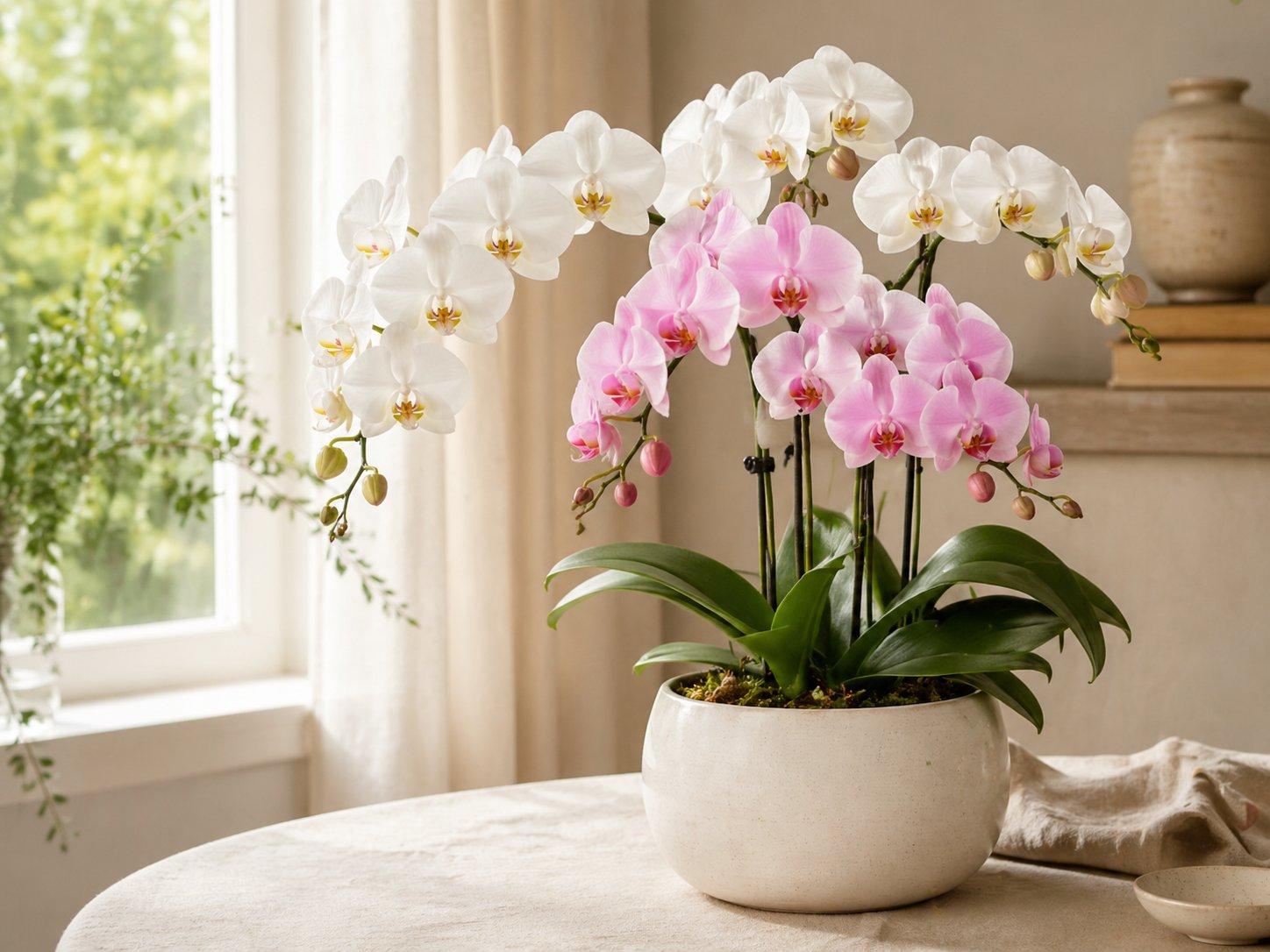
This beginner’s guide focuses on the Phalaenopsis orchid, commonly known as the moth orchid, one of the easiest and most popular varieties for indoor growing.
1. Understanding your orchid
Many tropical orchids are epiphytes, meaning they naturally grow attached to trees rather than rooted in ordinary garden soil. Their roots absorb moisture and nutrients while remaining exposed to air.

This explains why orchids need a special growing medium and good drainage.
A healthy moth orchid generally has firm green leaves, plump roots, and a stable crown. Its flowering stems may produce blossoms that last for several weeks or even months.
2. Orchid care at a glance
| Care factor | Beginner recommendation |
|---|---|
| Light | Bright, indirect sunlight |
| Temperature | Approximately 19–30°C daytime |
| Watering | When the bark is nearly dry |
| Humidity | Moderate to high, with airflow |
| Growing medium | Orchid bark mix |
| Fertilizer | Diluted orchid fertilizer during growth |
| Repotting | Usually every 1–2 years |
| Blooming | Often once or more per year, depending on conditions |
These recommendations apply primarily to Phalaenopsis orchids; other orchid types may require different conditions.
American Orchid Society
+1
3. Finding the perfect light

Orchids need enough light to grow and produce flowers, but intense direct sunlight can scorch their leaves.
An east-facing window is often ideal. A bright room with filtered sunlight also works well.
Watch your leaves for clues. Very dark green foliage can indicate insufficient light, while pale, scorched patches may indicate too much direct sunlight.
In hot climates such as the UAE, keep orchids away from strong afternoon sun, particularly against uncovered south- or west-facing windows.
4. How to water orchids correctly
Overwatering is one of the most common reasons orchids decline.
Unlike ordinary houseplants, Phalaenopsis orchids need their roots to breathe.

Step 1 — Check the moisture
Feel the bark and check the pot’s weight. Water when the mix is approaching dryness, rather than following a rigid calendar.

Step 2 — Water thoroughly
Use room-temperature water and allow it to pass through the growing medium.

Step 3 — Drain completely
Never leave the orchid standing in water. Avoid trapping water in the central crown, where new leaves emerge.
Some orchids need watering more than once weekly, while others need much less. Temperature, ventilation, potting medium, and pot size all affect how quickly they dry.
American Orchid Society
+1
5. Temperature and humidity
Moth orchids prefer warm, relatively stable conditions. Typical indoor temperatures suit them well, but cold air-conditioning drafts, hot windows, and sudden temperature changes can stress the plant.
Moderate humidity is helpful, especially in dry, air-conditioned rooms. A humidifier or nearby pebble tray can help, provided the pot does not sit directly in water.
Good airflow is equally important because stagnant, humid conditions can encourage fungal and bacterial problems.
6. Feeding orchids for healthy growth
Orchids benefit from light, regular feeding during active growth.
Use an orchid-specific fertilizer, diluted according to the product instructions. Feeding around twice monthly during active growth is a reasonable starting point, although the ideal frequency depends on the fertilizer and growing conditions.
Avoid heavy feeding: excess fertilizer salts can damage roots. Periodically flush the potting mix with plain water.
7. How to make your orchid bloom again


8
One of the biggest misconceptions about orchids is that they are finished once their flowers fall.
In reality, healthy moth orchids can rebloom repeatedly.
After flowering, inspect the flower spike. If it remains green and healthy, trimming above a lower node can sometimes encourage a secondary flowering branch. If the entire spike becomes brown and dry, remove it near the base using clean scissors.
Healthy, mature Phalaenopsis orchids may respond to a modest drop in nighttime temperature over several weeks, encouraging a new flower spike. Avoid extreme cold or sudden temperature changes.
American Orchid Society
+1
8. Repotting your orchid

Orchid growing media gradually break down and become compacted.
Repotting approximately every one to two years helps maintain healthy airflow around the roots.
Select a pot with drainage holes, remove old bark carefully, and trim only roots that are clearly dead or rotten. Replant using fresh orchid bark rather than ordinary potting soil.
9. Common orchid problems
| Symptom | Possible cause or action |
|---|---|
| Yellow leaves | Aging, excessive sunlight, or root problems |
| Wrinkled leaves | Dehydration or damaged roots |
| Mushy roots | Excess moisture and poor drainage |
| Buds falling early | Temperature changes or environmental stress |
| No new flowers | Insufficient light or unsuitable conditions |
| White cotton-like pests | Possible mealybug infestation |
A single yellowing bottom leaf may be normal aging. Always inspect the roots and overall plant before deciding on treatment.
10. Simple weekly orchid care checklist
Your weekly orchid routine
0 of 5 completedCheck bark moisture before wateringInspect leaves and roots for damage or pestsCheck light exposure and air-conditioning draftsEmpty any standing water from decorative potsLook for new leaves, roots, buds, or flower spikes
Reset checklist
Conclusion
Growing beautiful orchids does not require expert gardening skills. The foundation is simple: provide bright indirect light, avoid waterlogged roots, use an airy growing medium, and maintain comfortable indoor temperatures.
With patience and consistent care, an orchid can become a long-lived houseplant that rewards you with beautiful blooms year after year.
Publishing package
SEO information
Suggested page title
Orchid Care: A Beginner’s Guide to Healthy Blooms
URL slug
orchid-care-beginners-guide
Meta description
Learn how to care for orchids with simple tips on watering, sunlight, humidity, feeding, repotting, and encouraging beautiful blooms.
Focus keyword
orchid care for beginners
Suggested category and tags
Indoor Plants / Orchids, Phalaenopsis, Flowering Houseplants, Plant Care, Beginner Gardening
Recommended featured image: A naturally photographed Phalaenopsis orchid in full bloom, with its leaves and pot visible. Use an image with confirmed publication rights, rather than assuming internet photographs are free to reuse.
Authoritative references: American Orchid Society – Phalaenopsis Culture Sheet and Royal Horticultural Society – Moth Orchid Growing Guide.Prepared as an English-language article for plants.bin3aiah.net. The content and SEO package are ready for editorial review; it has not been published to WordPress. Images displayed here are visual references, not cleared website media assets.