

Views: 0
Monstera Deliciosa: The Complete Indoor Care Guide


9
The ultimate guide to growing a healthy, beautiful Swiss Cheese Plant indoors.
The Monstera deliciosa is one of the world’s most recognizable indoor plants. Famous for its large, glossy green leaves with dramatic natural splits and holes, this tropical climber brings a lush, architectural look to homes, offices, and indoor gardens.
Native to the tropical forests of Central America, Monstera deliciosa can grow into an impressive indoor specimen when given the right light, moisture, support, and care.
Monstera Deliciosa at a Glance
| Feature | Details |
|---|---|
| Botanical name | Monstera deliciosa |
| Common name | Swiss Cheese Plant |
| Family | Araceae |
| Plant type | Evergreen tropical climbing vine |
| Light | Bright, indirect sunlight |
| Watering | When top 3–5 cm of soil dries |
| Temperature | Ideally 18–29°C |
| Humidity | Preferably 50–70% |
| Indoor height | Commonly 1.5–3 m with support |
| Growth rate | Moderate to fast in good conditions |
| Toxicity | Toxic if chewed by cats, dogs, or people |
1. Light Requirements

Monstera deliciosa thrives in bright, indirect light. In its natural habitat, it grows beneath taller trees, receiving filtered sunlight through the forest canopy.
Position your Monstera near an east-facing window or a few feet away from a bright south- or west-facing window with a sheer curtain.
Too little light produces smaller leaves, slower growth, and fewer characteristic holes. Excessive direct sunlight, particularly during hot afternoons, can scorch the foliage.
2. Watering Your Monstera
The key to successful watering is consistency without waterlogging.
- Check the top 3–5 cm of potting soil before watering.
- Water thoroughly until excess moisture drains from the bottom.
- Empty the saucer so the roots never sit in standing water.
- Reduce watering during cooler months or periods of slow growth.
As a rough starting point, many indoor Monsteras need watering every 7–14 days, but actual frequency depends on pot size, temperature, soil, and light.
Important: Yellowing leaves combined with persistently wet soil may indicate overwatering or root damage.
3. Choosing the Best Soil
Monstera roots need oxygen as well as moisture. A loose, well-draining growing medium helps prevent root rot.
A practical homemade mix is:
Indoor potting mix
50%
Orchid bark
25%
Perlite or pumice
25%
Use a pot with drainage holes. Avoid dense garden soil, which can become compacted and retain excessive moisture indoors.
4. Temperature and Humidity
Monstera deliciosa prefers warm, moderately humid environments.
Aim for temperatures between 18°C and 29°C and humidity above approximately 50% when practical. Ordinary household humidity can still be sufficient, although very dry air may cause brown leaf edges.
In hot climates such as the UAE, indoor cultivation is often easier than exposing the plant to intense outdoor summer heat.
Keep it away from direct air-conditioning vents, heaters, and sudden temperature changes.
5. Helping Your Monstera Climb


10
Monstera deliciosa is naturally a climbing plant. In tropical forests, its aerial roots attach to trees, allowing the vine to climb toward brighter light.
Indoors, a moss pole, coir pole, or sturdy trellis encourages upright growth and can help the plant develop larger, more mature leaves.
Secure the main stem gently using soft plant ties. Avoid tying or damaging the leaf stalks.
6. Fertilizing for Healthy Growth
Feed your Monstera during active growth using a balanced houseplant fertilizer.
A diluted liquid fertilizer every 4–6 weeks is a reasonable starting point, following the product instructions. Reduce feeding when growth slows.
Avoid applying excessive fertilizer, which can damage roots and cause brown leaf tips.
7. Repotting

Repot when roots become crowded, circle heavily around the pot, or emerge through drainage holes.
For many young plants, this happens approximately every 1–2 years.
Choose a container only 2–5 cm wider than the existing pot. A dramatically oversized container can keep unused soil wet for too long.
8. Common Monstera Problems
| Symptom | Possible cause | What to do |
|---|---|---|
| Yellow leaves | Overwatering, aging leaves, or low light | Check roots, soil moisture, and lighting |
| Brown crispy tips | Dry air, inconsistent watering, or salt buildup | Review watering and humidity |
| Drooping leaves | Dry soil, wet damaged roots, or stress | Check moisture before watering |
| Small leaves | Insufficient light or immature growth | Improve light and climbing support |
| No leaf splits | Young plant or inadequate light | Provide bright indirect light |
| Black mushy roots | Root rot | Remove damaged roots and repot |
| Webbing or speckling | Possible spider mites | Isolate and inspect leaves |
9. Propagating Monstera Deliciosa

Monstera can be propagated from stem cuttings containing at least one node.
- Identify a healthy stem section with a visible node.
- Cut below the node using clean pruning shears.
- Place the node in water or a suitable moist propagation medium.
- Keep the cutting in bright, indirect light.
- Transfer to soil once a healthy root system develops.
A leaf without a stem node generally cannot produce a new Monstera plant.
10. How to Get Bigger Leaves With More Holes
The holes and splits in Monstera leaves are called fenestrations. They become more pronounced as the plant matures under favorable conditions.
To encourage mature foliage, provide bright indirect light, a sturdy climbing structure, adequate nutrients, consistent watering, and enough time for the plant to develop.
Existing leaves will not develop new holes after unfurling; fenestrations appear as new leaves form.
11. Special Care for Hot Climates
For homes in Abu Dhabi, Dubai, and similar climates, the biggest challenges are intense sunlight and dry air-conditioning.
Keep the plant indoors near a bright window, protect it from direct summer afternoon sun, and avoid placing it beneath an AC vent. A small humidifier can help when indoor humidity is particularly low.
Light, Water & Fenestration
+1
12. Simple Monstera Care Checklist
Plant maintenance tracker
0 of 6 completedCheck soil moisture before wateringInspect leaves for pests and yellowingWipe dust from large leavesCheck climbing support and plant tiesInspect roots and drainageFertilize if actively growing
Reset checklist
Frequently Asked Questions
Is Monstera deliciosa suitable for beginners? Yes. It is relatively forgiving when provided with sufficient light, appropriate watering, and good drainage.
Can Monstera survive in low light? It can tolerate moderate light, but growth may slow and new leaves may remain smaller and unsplit.
Are Monstera plants safe for pets? No. Their calcium oxalate crystals can cause painful mouth irritation if chewed or swallowed. Keep them away from pets and young children.
Monstera deliciosa
+1
How long does propagation take? Roots can begin forming within 2–4 weeks under suitable conditions, although new leaves may take several months.
UMN Extension
Final Thoughts
Monstera deliciosa combines striking tropical foliage with manageable indoor care. With bright indirect sunlight, well-draining soil, thoughtful watering, and climbing support, it can become a spectacular centerpiece for many years.
The most important rule is simple: observe your plant and adjust its care to its environment rather than following a rigid watering schedule.
SEO Publishing Package — Bin3aiah Plants
| Field | Recommended content |
|---|---|
| Post title | Monstera Deliciosa: The Complete Indoor Care Guide |
| Suggested slug | monstera-deliciosa-indoor-care-guide |
| Primary keyword | Monstera Deliciosa Care |
| Secondary keywords | Swiss Cheese Plant, Monstera Watering, Monstera Propagation, Indoor Tropical Plants |
| Category | Indoor Plants |
| Tags | Monstera, Houseplants, Tropical Plants, Plant Care, Indoor Gardening |
Meta description: Learn how to care for Monstera deliciosa indoors, including watering, sunlight, soil, humidity, propagation, and tips for beautiful split leaves.
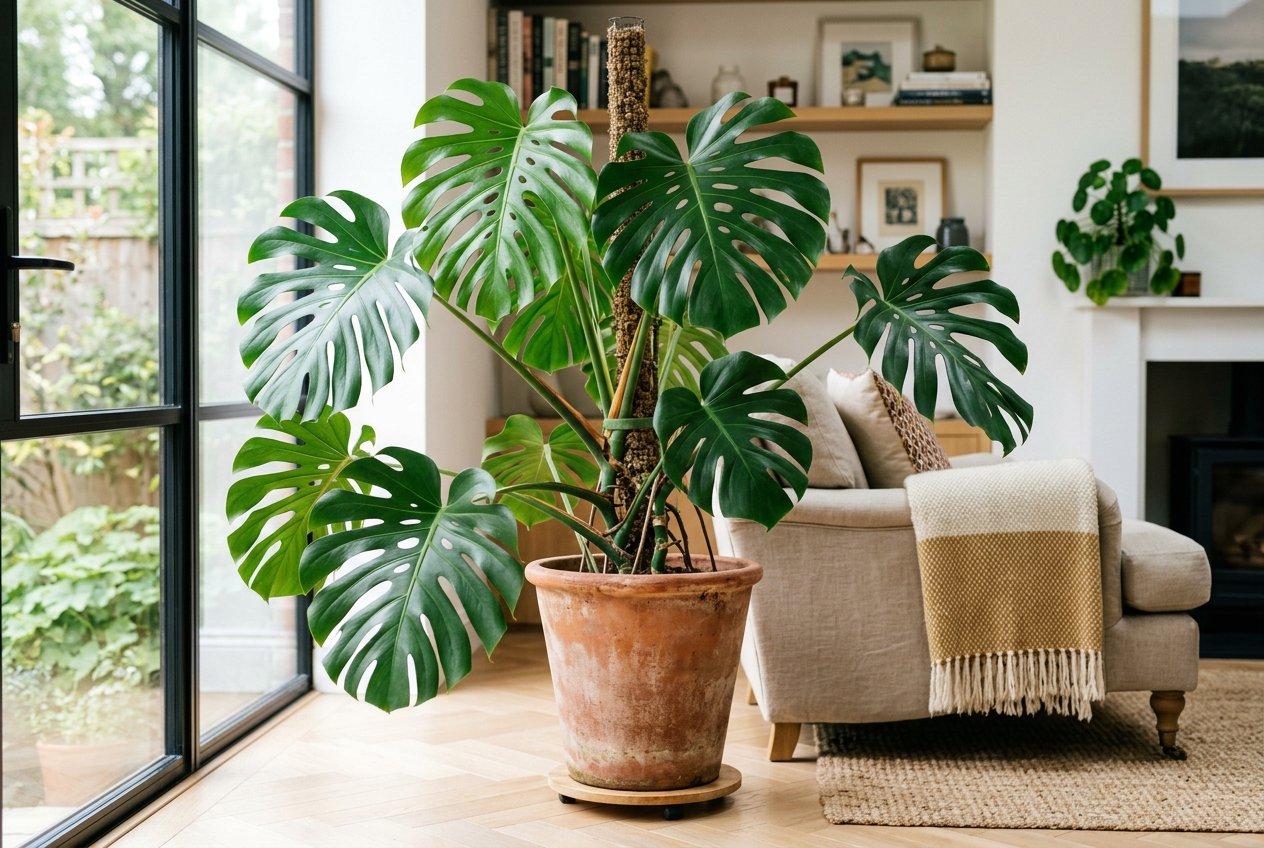
Featured image recommendation: A mature Monstera deliciosa with large fenestrated leaves beside a bright living-room window.
Reference sources: University of Wisconsin Horticulture · University of Minnesota Extension · Penn State Extension
Status: Article prepared for editorial review. Not published to the website.