
Views: 0
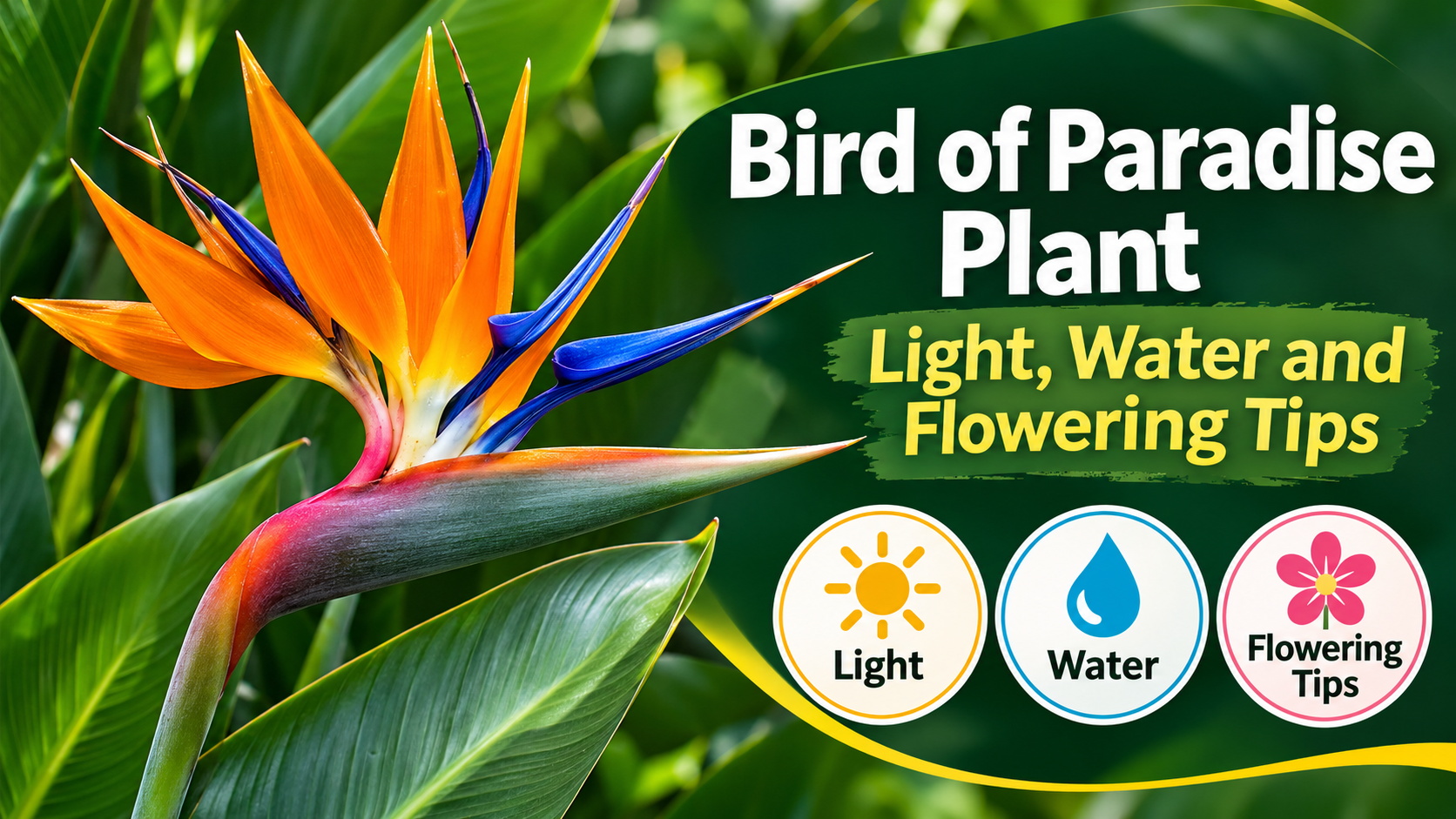
Bird of Paradise Plant: Light, Water and Flowering Tips
The Bird of Paradise plant (Strelitzia) is famous for its dramatic tropical foliage and spectacular flowers resembling colorful birds in flight. Native to South Africa, it brings an exotic atmosphere to gardens, patios and bright indoor spaces.

Although Bird of Paradise plants are relatively easy to maintain under suitable conditions, successful flowering requires the right balance of sunlight, watering, nutrition and patience.
1. Understanding Bird of Paradise Varieties
Two of the most popular species are:
- Strelitzia reginae: The classic Bird of Paradise with bright orange-and-blue flowers. Mature plants commonly reach around 1–1.5 meters in height.
- Strelitzia nicolai: The giant white Bird of Paradise, valued for its large banana-like leaves. Outdoors it can grow several meters tall and produces white-and-blue flowers when mature.

If producing colorful flowers is your main objective, Strelitzia reginae is generally the preferred choice. Strelitzia nicolai is especially popular for its architectural foliage.
2. Light Requirements: The Secret to Healthy Growth
Bird of Paradise plants need generous sunlight to grow well. Mature Strelitzia reginae plants can thrive in full sun or partial shade, depending on temperature and local conditions.
Indoor Light
Position your plant near a large, bright window. East-, south- or west-facing windows may be suitable depending on your location. Acclimate plants gradually to stronger direct sunlight.
Outdoor Light
Provide several hours of good sunlight daily. In hot desert climates, gentle morning sunlight combined with afternoon shade can help protect leaves from excessive heat.
Flowering tip: A mature Bird of Paradise that develops abundant leaves but no flowers may not be receiving enough light.
3. Watering: Finding the Right Balance
Bird of Paradise plants enjoy consistent moisture during active growth, but their roots should never remain in waterlogged soil.
- Spring and summer: Water thoroughly when the upper few centimeters of the soil begin to dry.
- Autumn and winter: Water less frequently as plant growth slows.
- Indoor containers: Ensure the pot has drainage holes and empty standing water from saucers.
- Hot climates: Check moisture frequently because soil can dry much faster in intense heat.
Yellowing leaves and persistently soggy compost can indicate overwatering. Drooping leaves and very dry soil may indicate insufficient water.
4. Best Soil and Fertilizer
A fertile, well-draining potting mixture is ideal. A loam-based compost amended with suitable drainage material can provide moisture retention and root aeration.
Feed your plant with a balanced fertilizer during active growth, following the manufacturer’s instructions. Excess fertilizer can cause salt accumulation and root damage.
5. Temperature and Humidity
Bird of Paradise plants generally prefer warm conditions. Keep indoor specimens away from cold drafts, air-conditioning outlets and sudden temperature changes. Protect plants from frost and prolonged cold conditions.
Normal indoor humidity can be acceptable, although very dry air may contribute to brown leaf edges.
6. How to Encourage Bird of Paradise Flowers

Why is my Bird of Paradise not flowering? The answer often involves maturity, sunlight or growing conditions. Plants raised from seed may require five to ten years before reaching flowering maturity.
- Increase sunlight: Provide generous light and appropriate direct sunlight.
- Allow the plant to mature: Young plants produce foliage long before their first flowers.
- Feed during active growth: Supply balanced nutrition without overfertilizing.
- Avoid excessive repotting: Established plants often flower well when roots are somewhat confined, but not severely restricted.
- Keep watering consistent: Avoid extreme drought and waterlogging.
- Maintain warm conditions: Protect plants from cold temperatures and environmental stress.
Flowering seasons vary according to species and climate. Strelitzia reginae can flower during winter and spring in suitable environments, and at other times under favorable conditions.
7. Common Bird of Paradise Problems
| Problem | Possible Cause | Solution |
|---|---|---|
| Yellowing leaves | Overwatering or leaf aging | Check moisture and drainage |
| Brown leaf tips | Dryness or mineral buildup | Review watering and water quality |
| No flowers | Insufficient light or immaturity | Improve light and allow time |
| Splitting leaves | Natural growth or wind | Shelter from strong winds |
| Slow growth | Low light, cool temperatures or poor nutrition | Improve growing conditions |
8. Growing Bird of Paradise in Hot Climates
In the UAE and other regions with extremely hot summers, intense sunlight and rapid water evaporation require extra attention.
- Provide morning sunshine and afternoon shade during extreme heat.
- Check container moisture regularly rather than following a fixed schedule.
- Use well-draining soil and avoid standing water.
- Protect leaves from strong, hot winds.
- Move indoor plants away from air-conditioning drafts.
9. Bird of Paradise Flower Gallery

10. Frequently Asked Questions
Can Bird of Paradise grow indoors?
Yes. Both Strelitzia reginae and Strelitzia nicolai can grow indoors with abundant light, although flowering indoors can be difficult.
How often should I water a Bird of Paradise?
Water whenever the upper portion of the growing medium begins to dry. Frequency depends on season, pot size, light, airflow and temperature.
Why does my Bird of Paradise have no flowers?
Common reasons include insufficient sunlight, plant immaturity and environmental stress.
Is Bird of Paradise safe for pets?
Strelitzia plants can cause gastrointestinal upset if eaten by pets. Keep them out of reach of cats, dogs and other animals that may chew the plant.
Conclusion
The Bird of Paradise is an exceptional tropical ornamental plant, combining impressive foliage with extraordinary flowers. By providing generous sunlight, balanced watering, well-draining soil and appropriate nutrients, you can keep your Strelitzia attractive for many years.
Remember: The keys to flowering are plant maturity, adequate sunlight and consistently good growing conditions.