
Views: 7
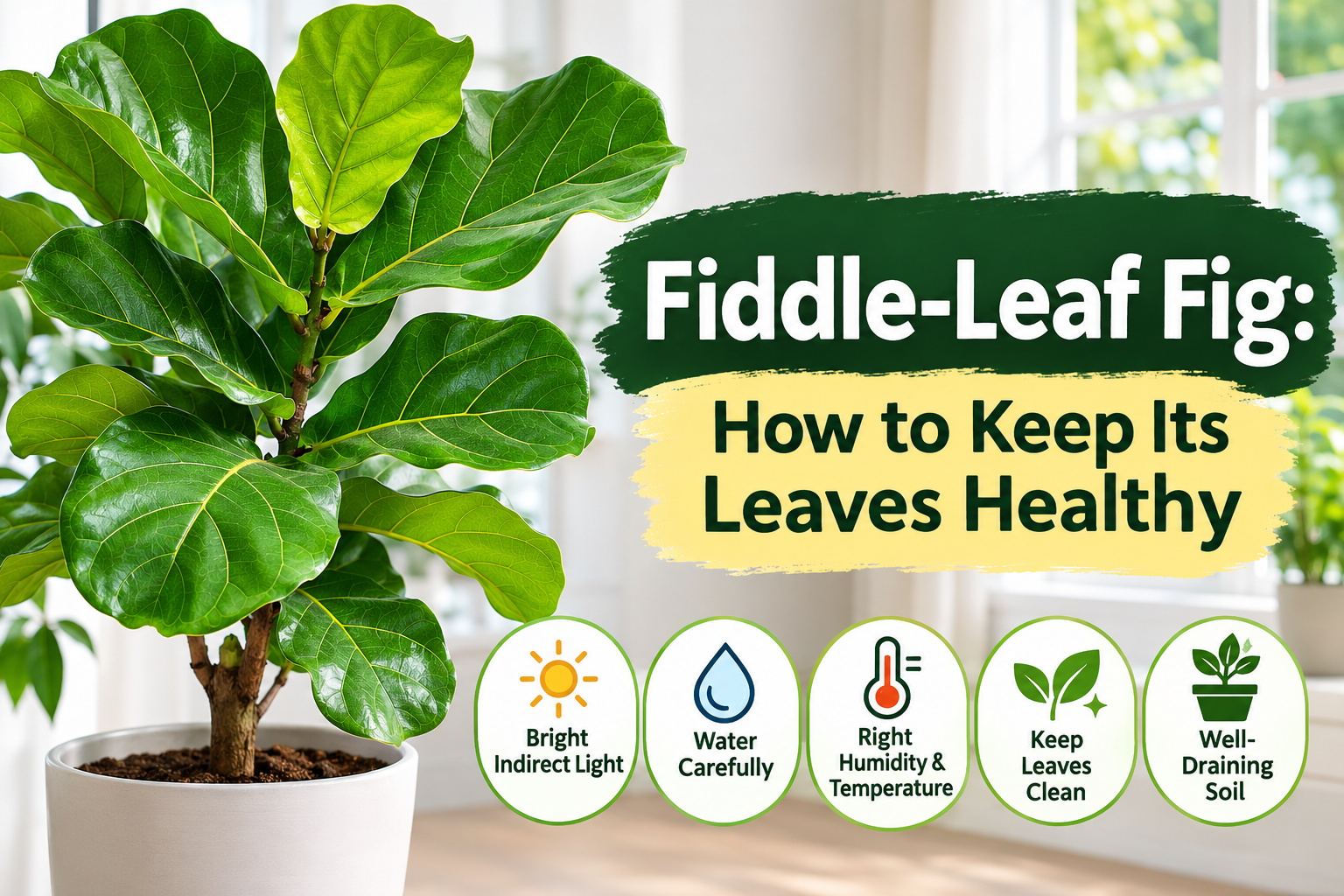
Fiddle-Leaf Fig: How to Keep Its Leaves Healthy

The fiddle-leaf fig (Ficus lyrata) is one of the most recognizable indoor plants, celebrated for its large, glossy, violin-shaped leaves and impressive upright appearance. Originally native to tropical Africa, this evergreen tree has become a favorite for bright living rooms, offices, and contemporary interiors.
Despite its attractive appearance, the fiddle-leaf fig can be sensitive to unsuitable conditions. Brown spots, yellow leaves, drooping foliage, and unexpected leaf drop are common signs that something needs attention.
Fortunately, keeping its leaves healthy becomes much easier once you understand its requirements for light, watering, humidity, soil, and routine maintenance.
1. Give Your Fiddle-Leaf Fig Plenty of Light
Light is one of the most important factors affecting the health and appearance of fiddle-leaf fig leaves.
These tropical trees prefer bright, indirect sunlight. Place your plant close to a bright window where it can receive several hours of good natural light each day.
- Choose an east-facing window for gentle morning sunlight.
- Use a sheer curtain to filter intense afternoon sunlight.
- Avoid dark corners and rooms with insufficient daylight.
- Rotate the plant occasionally to encourage balanced growth.
- Introduce stronger direct sunlight gradually to avoid leaf scorch.
Signs of insufficient light: slow growth, smaller new leaves, leaning toward windows, and loss of lower foliage.
In particularly hot climates, including the UAE, protect leaves from excessive heat near sun-exposed glass.
2. Water Correctly to Prevent Brown Spots
Incorrect watering is among the most frequent causes of fiddle-leaf fig leaf problems.
The goal is to maintain evenly available moisture without keeping the roots constantly wet.
How to water a fiddle-leaf fig
- Insert your finger approximately 2–5 cm into the soil.
- If the upper layer feels dry, check whether the plant needs watering.
- Water slowly and thoroughly until water drains through the pot.
- Allow excess water to drain completely.
- Empty any collected water from the saucer.
There is no universal weekly watering schedule. A plant in a bright, warm room may dry out much faster than one in a cooler environment.
Overwatering symptoms: persistent wet soil, yellowing leaves, dark spots, and deteriorating roots.
Underwatering symptoms: dry potting mix, drooping foliage, and crispy brown leaf edges.
3. Understand What Healthy Leaves Look Like

Healthy fiddle-leaf fig leaves are generally firm, broad, and rich green, with clearly visible veins and a slightly leathery texture.
New leaves may initially appear lighter green and softer than mature foliage. They normally develop a deeper color and firmer texture as they mature.
Inspecting your plant regularly helps you notice small changes before they develop into serious problems.
4. Maintain Suitable Humidity and Temperature
Fiddle-leaf figs naturally grow in warm tropical environments and perform best when indoor conditions remain relatively stable.
An indoor temperature around 18–27°C is generally suitable. Avoid exposing the plant to sudden cold drafts or extreme temperature changes.
Ways to improve indoor conditions
- Keep the plant away from direct air-conditioning airflow.
- Use a humidifier when indoor air becomes unusually dry.
- Maintain good air circulation without strong drafts.
- Avoid placing the plant beside heating appliances.
- Monitor humidity during extended periods of air-conditioning.
Dry air can contribute to crispy leaf edges, although brown tips may also result from watering problems or accumulated salts in the soil.
5. Clean the Leaves Regularly
Large fiddle-leaf fig leaves can collect considerable dust, particularly in indoor environments.
Dust reduces the light reaching the leaf surface and may make early pest infestations harder to identify.
Safe leaf-cleaning method
- Use a soft, clean cloth slightly dampened with water.
- Support each leaf gently from underneath.
- Wipe the upper surface without applying excessive pressure.
- Inspect the undersides for insects and webbing.
- Allow the foliage to dry naturally.
Avoid harsh detergents, oily leaf-shine products, and abrasive sponges.
Cleaning the leaves every few weeks, or whenever dust becomes visible, helps maintain their natural appearance.
6. Choose Well-Draining Potting Soil
Healthy foliage begins with healthy roots.
Fiddle-leaf figs require a potting mixture that holds enough moisture for the roots while allowing excess water to drain away.
A suitable indoor plant mixture may contain:
- Quality houseplant potting compost
- Perlite to improve drainage and aeration
- Fine orchid bark for additional air spaces
Always choose a container with functioning drainage holes.
Repot when the plant becomes significantly root-bound, ideally during active growth. Choose a container only slightly larger than the previous one to reduce the risk of excessively wet soil.
7. Identify Common Fiddle-Leaf Fig Problems
| Leaf Problem | Possible Cause | Recommended Action |
|---|---|---|
| Brown, crispy edges | Dry soil, low humidity, or excess heat | Check watering and environmental conditions |
| Dark brown spots | Overwatering, root stress, or disease | Inspect soil moisture, drainage, and roots |
| Yellowing leaves | Excess water, low light, or natural aging | Assess watering and available light |
| Drooping leaves | Water stress or environmental changes | Check soil before adding water |
| Bleached patches | Excessive direct sunlight | Provide filtered sunlight |
| Sticky leaves or webbing | Possible insect infestation | Inspect, isolate, and treat appropriately |
Important: A single leaf symptom does not always identify the exact problem. Consider soil moisture, lighting, temperature, pests, and recent changes together before making adjustments.
8. Encourage Healthy New Leaf Growth

Healthy new growth is an encouraging sign that your fiddle-leaf fig is adapting well to its environment.
New leaves typically begin as small, delicate structures protected by a sheath. As they unfold, they expand and gradually become firmer.
To encourage healthy growth:
- Provide consistent bright light.
- Maintain appropriate watering practices.
- Use a balanced houseplant fertilizer during active growth.
- Protect emerging leaves from physical damage.
- Avoid unnecessary relocation or frequent repotting.
Growth may slow naturally during periods of reduced light.
9. Prune Damaged Leaves Carefully
Some cosmetic damage is permanent. Brown patches usually do not turn green again, even after the underlying problem is corrected.
However, a partly damaged leaf may still contribute to photosynthesis.
Remove leaves when they are mostly dead, severely damaged, or affected by problems requiring sanitation. Use clean, sharp pruning tools and avoid removing too much healthy foliage at once.
Fiddle-leaf fig sap can irritate skin, so wearing gloves during pruning is advisable.
10. Follow a Simple Care Routine
| Frequency | Care Task |
|---|---|
| Every few days | Check soil moisture and visible leaf changes |
| Weekly | Inspect for pests and confirm suitable lighting |
| Every 2–4 weeks | Clean dusty leaves gently |
| During active growth | Fertilize according to product instructions |
| Annually | Assess root development, soil condition, and repotting needs |
11. Frequently Asked Questions
Why are my fiddle-leaf fig leaves turning brown?
Brown leaves may result from underwatering, excessive moisture, low humidity, heat stress, or disease. Examine the location and appearance of the damage, along with soil and root conditions, before choosing a treatment.
Should I mist my fiddle-leaf fig?
Occasional misting provides only a temporary increase in moisture around the foliage. A humidifier is generally more effective for maintaining consistent humidity. Avoid leaving foliage persistently wet.
Can a fiddle-leaf fig grow in low light?
Fiddle-leaf figs generally perform poorly in low-light conditions. They need bright light to sustain healthy foliage and continued growth. A suitable full-spectrum grow light may help when natural light is insufficient.
How often should I repot my fiddle-leaf fig?
Repot based on root development rather than a fixed annual schedule. Signs include dense circling roots, roots emerging from drainage holes, and soil drying unusually quickly because the container is crowded.
Is fiddle-leaf fig safe for pets?
No. Fiddle-leaf figs contain irritating sap and are considered toxic to cats and dogs if chewed or ingested. Keep them away from curious pets and children.
Conclusion: Healthy Leaves Start with Consistent Care
Keeping a fiddle-leaf fig healthy does not require complicated gardening techniques. The most important factors are bright filtered light, careful watering, suitable drainage, stable temperatures, and regular leaf inspection.
Instead of reacting to every small change, observe your plant over time and make gradual adjustments when necessary.
With consistent care, your fiddle-leaf fig can maintain attractive green foliage and become a long-lasting feature in your indoor plant collection.
Image Credits and Further Reading
Photographs are from Wikimedia Commons and are used under the Creative Commons licenses identified below. Attribution and applicable ShareAlike requirements must be preserved.
- Fiddle Leaf Fig in Pot — Morrisjm, CC BY-SA 3.0.
- Ficus lyrata Leaf — seeks2dream, CC BY-SA 2.0.
- New Leaf Development — Kraskovskyi Tymofii, CC BY-SA 4.0.
Additional care information: Royal Horticultural Society — Ornamental Figs.