
Views: 0
Mint: How to Grow and Harvest Fresh Leaves

Mint (Mentha) is one of the easiest and most rewarding herbs to grow at home. Famous for its refreshing fragrance, bright green leaves, and vigorous growth, mint is widely used in teas, salads, desserts, sauces, and cold beverages.
Whether you have a large garden, a balcony, or a sunny windowsill, growing mint gives you convenient access to fresh aromatic leaves. With the right care, a healthy mint plant can provide repeated harvests throughout its growing season.
1. Popular Types of Mint to Grow
There are many different mint varieties, each offering its own fragrance, flavor, and culinary uses.
- Spearmint: Mild, sweet, and refreshing. Excellent for mint tea, lemonade, salads, and mojitos.
- Peppermint: Contains a stronger menthol flavor and is commonly used in teas and desserts.
- Apple Mint: Features soft, slightly fuzzy leaves and a gentle fruity fragrance.
- Chocolate Mint: A peppermint cultivar with an aroma often associated with chocolate and mint.
Growing tip: Spearmint is a practical choice for beginners because it grows vigorously and is useful in many recipes.
2. Choosing the Best Location for Mint

Mint grows well in locations receiving approximately four to six hours of direct sunlight daily, although it can also tolerate partial shade. In especially hot climates, protection from strong afternoon sunlight helps prevent heat stress.
Ideal Growing Conditions
- Light: Full sun to partial shade, depending on local temperatures.
- Soil: Moist, fertile, well-draining potting mix.
- Water: Regular watering to maintain consistent soil moisture.
- Containers: Pots with drainage holes and adequate room for root development.
- Airflow: Good ventilation helps reduce fungal problems.
Mint spreads quickly through underground stems known as rhizomes. Growing it in a separate container is an effective way to prevent it from invading surrounding garden beds.
Growing Mint in Hot Climates
In places such as Abu Dhabi and Dubai, extreme summer temperatures can stress mint plants. Position containers where they receive gentle morning sunlight and afternoon shade. Monitor the soil frequently because pots can dry out quickly in hot, windy conditions.
During very hot weather, moving mint into a bright, sheltered outdoor position can improve its growing conditions.
3. How to Plant Mint Successfully
Mint can be grown from nursery plants, rooted cuttings, or seeds. Starting with a healthy young plant or cutting is generally the simplest method, especially when you want to preserve a particular variety.
Step-by-Step Planting Guide
- Choose a container approximately 30 cm or wider with drainage holes.
- Fill the pot with nutrient-rich, well-draining potting mix.
- Remove the young mint plant carefully from its original container.
- Place the plant at approximately the same soil depth.
- Fill around the roots and gently firm the soil.
- Water thoroughly until excess moisture drains from the bottom.
- Place the pot in a bright location protected from excessive heat.
As mint develops, its underground stems will gradually fill the container. Divide or repot overcrowded plants to maintain healthy growth.
4. How to Propagate Mint from Cuttings

Propagating mint from stem cuttings is a simple and inexpensive way to create additional plants.
- Select a healthy, non-flowering stem approximately 10–15 cm long.
- Cut just below a leaf node using clean scissors.
- Remove the lower leaves to expose part of the stem.
- Place the cutting in clean water, keeping the remaining leaves above the waterline.
- Position it in bright, indirect light and replace the water regularly.
- Once a healthy root system develops, transplant the cutting into moist potting mix.
Mint cuttings often begin producing roots within one to two weeks under favorable conditions, although actual timing varies with temperature, light, and plant health.
5. Watering and Fertilizing Mint
Mint prefers consistently moist soil, but excessive watering can cause root problems. Check the upper layer of soil regularly and water when it begins to feel dry.
Container-grown mint may require more frequent watering during warm weather. Always allow excess water to escape through the drainage holes.
Fertilizing Tips
- Use a fertile potting mix when planting.
- Apply a diluted balanced fertilizer when necessary during active growth.
- Avoid excessive nitrogen-rich fertilizer, which can encourage soft growth.
- Refresh or replace depleted potting soil when growth becomes weak.
Healthy mint growing in nutrient-rich soil generally does not require heavy feeding.
6. How to Harvest Fresh Mint Leaves

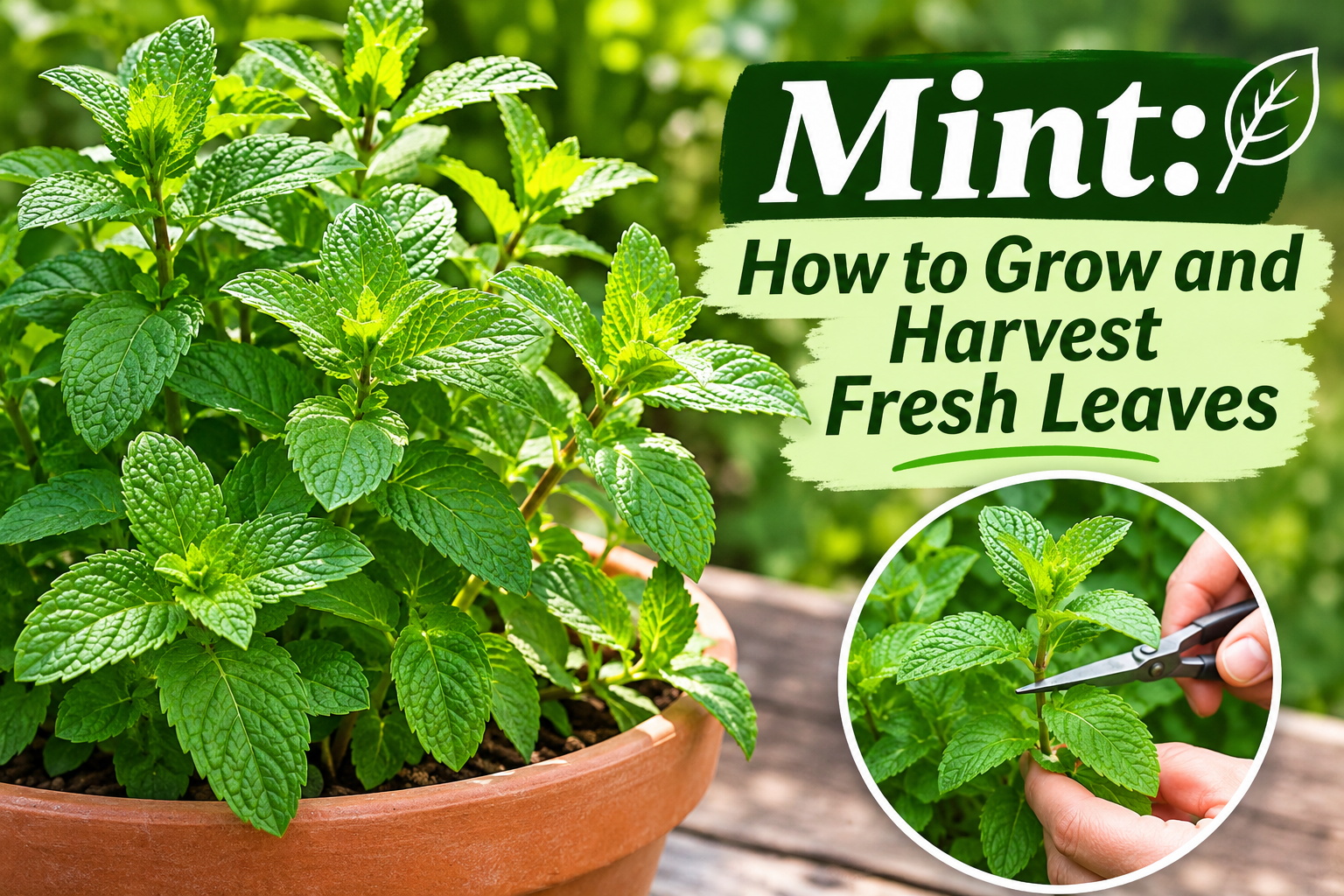
Regular harvesting encourages mint to develop new side shoots and maintain a compact, bushy appearance.
Best Harvesting Method
- Allow young mint plants to establish several healthy stems before harvesting heavily.
- Choose fresh, healthy leaves and tender shoots.
- Cut stems just above a pair of leaves to encourage branching.
- Use clean scissors to avoid damaging the stems.
- Harvest regularly instead of allowing the plant to become excessively tall.
- Leave sufficient foliage for continued photosynthesis and regrowth.
For a young or recovering plant, avoid removing a large proportion of the foliage at once. Established mint generally responds well to regular trimming during active growth.
When Is the Best Time to Harvest Mint?
Harvest in the morning after dew has dried, particularly during hot weather. Young, tender leaves usually provide excellent flavor for fresh culinary uses.
Mint can be harvested repeatedly while actively growing, provided the plant receives enough water, nutrients, and light to recover.
7. Common Mint Growing Problems
Yellow Leaves
Yellowing may indicate excess watering, nutrient imbalance, natural leaf aging, or poor drainage. Inspect the soil and roots before making changes.
Wilting Leaves
Wilting can occur because of dry soil, intense heat, or damaged roots. Check soil moisture and move heat-stressed containers into a more sheltered location.
Brown Leaf Edges
Brown edges may result from high temperatures, inconsistent watering, or excessive fertilizer. Improve growing conditions gradually.
Leggy Growth
Long, weak stems with widely spaced leaves often indicate inadequate light. Increase available light and pinch back the growing tips.
Mint Rust and Other Diseases
Mint rust can produce orange-brown pustules on leaves and stems. Remove affected material, avoid overhead watering where possible, and improve airflow. Severely infected plants may need to be discarded.
Common Pests
Aphids and spider mites occasionally affect mint. Inspect both sides of the leaves and use appropriate plant-safe controls if necessary, following instructions for edible herbs.
8. How to Store Fresh Mint Leaves
Freshly harvested mint can be used immediately or preserved for later use.
Refrigerator Storage
Gently wash leaves when needed, dry them thoroughly, and store them in a container lined with a slightly damp paper towel. Refrigerate and inspect regularly.
Storing Mint Stems in Water
Place cut stems in a clean jar containing a little water, keeping leaves above the waterline. Cover loosely and refrigerate when suitable, refreshing the water regularly.
Freezing Mint
Freeze clean, dry leaves in suitable freezer containers or add chopped leaves to ice cube trays with water. Frozen mint is especially convenient for drinks and cooking.
Drying Mint
Arrange clean mint leaves in a dry, shaded, well-ventilated area until completely crisp. Store dried leaves in airtight containers away from heat, light, and moisture.
9. Delicious Ways to Use Homegrown Mint
Mint is valued around the world for its fresh flavor and culinary versatility.
- Mint Tea: Steep fresh leaves in hot water for a fragrant herbal infusion.
- Lemon Mint: Blend mint with lemon juice, cold water, and ice.
- Salads: Add chopped mint to tabbouleh, cucumber salads, or fruit salads.
- Yogurt Sauces: Combine fresh mint with yogurt, garlic, and lemon.
- Desserts: Use mint to garnish fruit, sorbets, and chocolate desserts.
- Infused Water: Add fresh leaves to chilled water with cucumber or citrus.
10. Frequently Asked Questions
Does mint grow back after cutting?
Yes. Healthy, established mint plants usually produce new shoots after harvesting. Cutting above leaf nodes encourages additional branching.
Can mint grow indoors?
Yes. Mint can grow indoors when it receives sufficient bright light. A sunny window or suitable grow light may help maintain healthy growth.
How often should mint be watered?
Water according to soil moisture rather than a fixed schedule. The soil should remain lightly moist but never permanently waterlogged.
Can mint survive hot summers?
Mint can tolerate warm conditions, but extreme heat may cause stress. Afternoon shade, adequate watering, and protection from very hot surfaces are especially important in desert climates.
Why is my mint not growing well?
Possible causes include overcrowded roots, poor drainage, insufficient light, excessively dry soil, nutrient deficiencies, or pests. Examine the growing conditions systematically.
Conclusion
Mint is an excellent herb for beginners and experienced gardeners alike. With fertile soil, adequate moisture, suitable sunlight, and regular harvesting, a single container can provide a continuing supply of fresh, fragrant leaves.
Growing mint at home also allows you to enjoy freshly picked herbs in teas, salads, sauces, and refreshing beverages whenever your plants are ready to harvest.
Start with a healthy mint plant, grow it in a well-drained container, and trim it regularly for the best results.
Sources and Further Reading
Photo credits: Alex Abair / iNaturalist, via Wikimedia Commons. Images licensed under CC BY 4.0. Images have been displayed at reduced resolution; no other modifications intended. Individual file details are available on Wikimedia Commons.