
Views: 8
Spider Plant: Care, Propagation and Common Problems
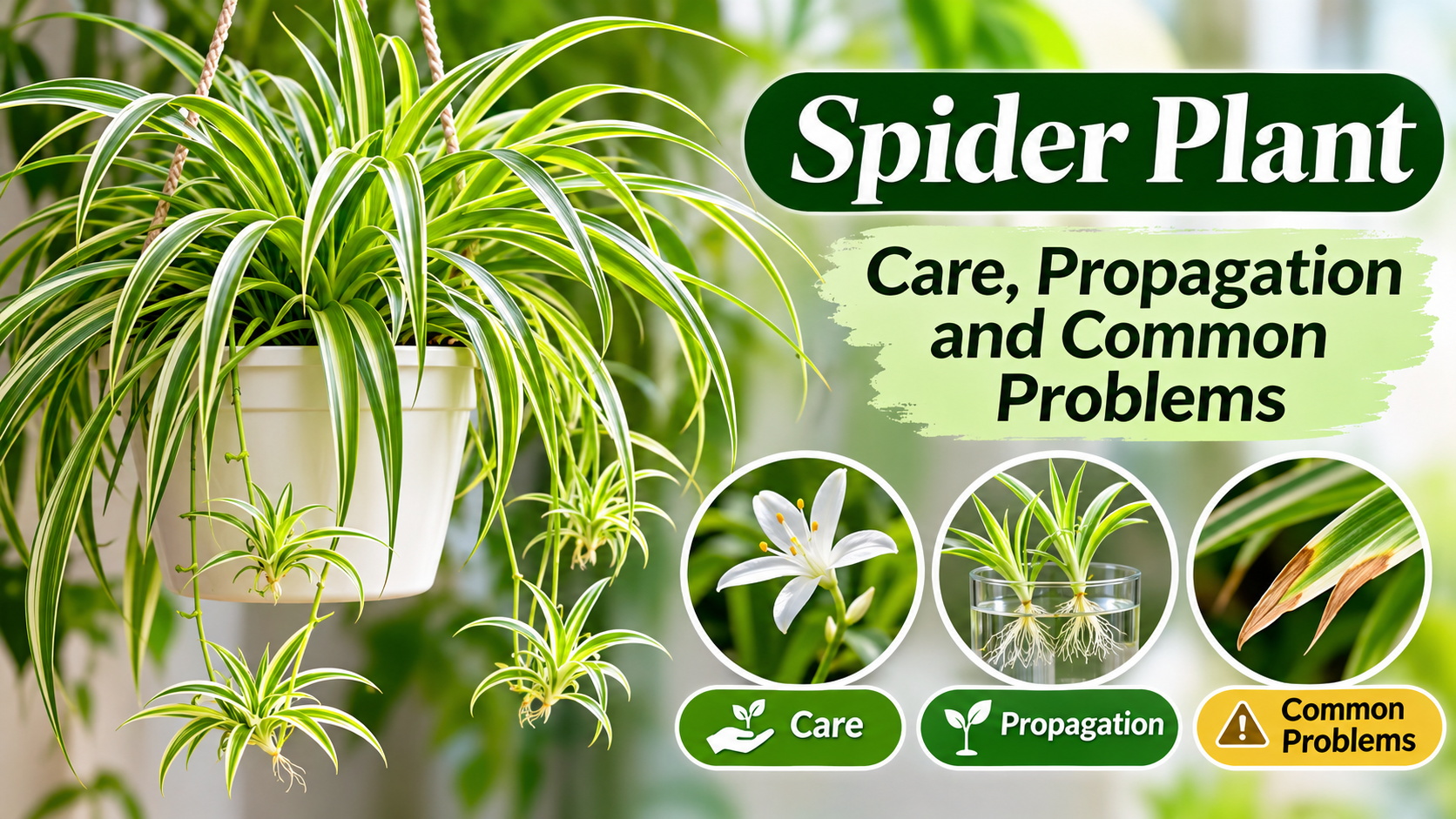
The Spider Plant (Chlorophytum comosum) is one of the easiest and most attractive houseplants to grow. Famous for its long, arching green-and-white leaves and miniature baby plants, this resilient species adds a fresh, natural touch to homes, offices and indoor gardens.
Whether you are a beginner or an experienced gardener, this complete guide explains how to keep your spider plant healthy, propagate new plants and solve common growing problems.

Spider Plant Quick Care Guide
| Care Requirement | Recommendation |
|---|---|
| Scientific Name | Chlorophytum comosum |
| Common Name | Spider Plant |
| Light | Bright, indirect sunlight |
| Watering | When the top 2–3 cm of soil dries |
| Temperature | Ideally 18–27°C |
| Humidity | Average indoor humidity |
| Soil | Well-draining potting mix |
| Propagation | Spiderettes and root division |
| Difficulty | Easy |
1. How Much Light Does a Spider Plant Need?
Spider plants thrive in bright, indirect sunlight. They tolerate moderate shade, but insufficient light can slow their growth and reduce their attractive leaf variegation.
An east-facing window or a bright position away from intense afternoon sunlight is usually ideal.
- Bright indirect light: Encourages healthy growth and strong leaf coloration.
- Low light: Usually tolerated, although growth becomes slower.
- Harsh direct sunlight: May cause brown patches or scorched foliage.

2. How Often Should You Water a Spider Plant?
Watering correctly is one of the most important parts of spider plant care. Spider plants have fleshy roots that store water, which helps them tolerate occasional dry periods.
Check the soil with your finger before watering. If the upper 2–3 cm feels dry, water thoroughly until excess moisture drains from the bottom of the pot.
Signs of Underwatering
- Dry potting soil
- Drooping or curling leaves
- Brown, crispy leaf tips
- Reduced growth
Signs of Overwatering
- Yellowing leaves
- Consistently wet soil
- Soft, deteriorating roots
- Unpleasant smell from the potting mix
Important: Avoid following a fixed watering schedule without checking the soil. Temperature, humidity, lighting and pot size all influence how quickly the soil dries.
3. Best Soil and Fertilizer for Spider Plants
Spider plants prefer a loose, well-draining potting mix that retains some moisture without becoming waterlogged.
A standard indoor potting mix with added perlite is a practical choice. Always use a container with drainage holes.
During active growth, apply a diluted balanced liquid fertilizer approximately every four to eight weeks if the plant needs additional nutrients.
Overfertilizing can lead to mineral buildup, damaged leaf tips and stressed roots. Reduce feeding when growth slows.
4. How to Propagate Spider Plants
One of the most fascinating characteristics of spider plants is their ability to produce miniature plants known as spiderettes or plantlets.
These develop along long flowering stems and can eventually form their own roots.

Method 1: Propagation in Soil
- Choose a healthy spiderette with visible root beginnings.
- Prepare a small pot with moist, well-draining soil.
- Position the baby plant so its roots contact the potting mix.
- Keep the soil lightly moist while roots establish.
- Place the new plant in bright, indirect light.
You may leave the spiderette attached to the mother plant until it establishes roots, then cut the connecting stem.
Method 2: Propagation in Water
- Carefully separate a healthy spiderette from the parent plant.
- Place the base and developing roots in clean water.
- Keep the leaves above the waterline.
- Change the water regularly.
- When healthy roots have developed, transfer the plant to potting soil.
Method 3: Root Division
Mature spider plants may be divided during repotting. Carefully remove the plant from its container and separate established sections with their own roots and foliage.
Plant each division in a suitable pot and water gently.
5. Spider Plant Flowers and Baby Plants
Mature spider plants may produce delicate white flowers along slender stems. These flowers can be followed by small plantlets that eventually develop their own roots.

Plantlet production depends on plant maturity, lighting, growing conditions and variety.
A healthy plant may produce numerous spiderettes, creating an attractive cascading display in a hanging basket.
6. Common Spider Plant Problems and Solutions
Brown Leaf Tips
Brown tips are among the most frequently reported spider plant problems.
Possible causes include inconsistent watering, fertilizer salts, mineral sensitivity and dry indoor conditions.
Solution: Review your watering habits, avoid excessive fertilizer and consider using rainwater, filtered water or another low-mineral source if tap water appears to be contributing.
Yellow Leaves
Yellow leaves can result from prolonged overwatering, poor drainage, inadequate light or natural aging.
Solution: Inspect the soil and roots, improve drainage and provide suitable indirect light.
Drooping Leaves
Drooping foliage can indicate dry soil, root damage or environmental stress.
Solution: Check soil moisture first. Water thoroughly if dry, but investigate drainage and roots if the soil remains wet.
Spider Plant Not Producing Babies
A spider plant may fail to produce spiderettes because it is immature or receives insufficient light.
Solution: Provide bright, indirect sunlight, moderate feeding and consistent care. Allow the plant time to mature.
Root Rot
Root rot is commonly associated with saturated potting mix and inadequate drainage.
Solution: Remove damaged roots with clean tools, discard deteriorated soil and repot into fresh, well-draining potting mix.
Common Pests
Spider plants can occasionally attract spider mites, mealybugs and scale insects.
Solution: Isolate affected plants, inspect leaf undersides and remove pests using appropriate houseplant-safe treatments according to product instructions.
7. When and How to Repot a Spider Plant
Spider plants develop strong root systems and can eventually become crowded inside their containers.
Signs that repotting may be necessary include roots emerging from drainage holes, unusually rapid drying and declining growth.
- Select a pot only slightly larger than the current one.
- Remove the plant carefully.
- Inspect the roots and remove unhealthy sections.
- Add fresh, well-draining potting mix.
- Position the plant at its previous planting depth.
- Water thoroughly and allow excess water to drain.
Repotting is generally easiest during active growth when the plant can establish itself more quickly.
8. Caring for Spider Plants in Hot Climates
In hot regions such as Abu Dhabi and Dubai, spider plants generally perform best indoors during periods of extreme summer heat.
Keep them in bright rooms away from direct afternoon sunlight, hot windows and strong air-conditioning drafts.
Air-conditioned environments may affect humidity and soil-drying rates, so monitor the potting mix rather than assuming all indoor plants need the same watering frequency.
9. Best Places to Display a Spider Plant
Spider plants are especially attractive when their arching foliage has enough space to cascade naturally.
- Hanging baskets: Ideal for trailing plantlets.
- Bookshelves: Add soft greenery to interior spaces.
- Bright living rooms: Provide comfortable growing conditions.
- Office desks: Suitable where adequate indirect light is available.
- Indoor plant stands: Showcase their flowing growth habit.
10. Frequently Asked Questions
Is the spider plant easy to grow?
Yes. Spider plants are adaptable, resilient houseplants that generally require only moderate attention.
Can spider plants survive in low light?
They can tolerate lower light levels, although their growth may slow and their variegation may become less pronounced.
How long do spider plants live?
With appropriate care, spider plants can survive for many years and produce multiple generations of plantlets.
Should I cut off brown leaf tips?
Brown tips may be trimmed with clean scissors for cosmetic reasons. However, correcting the cause is important because damaged tissue will not turn green again.
Are spider plants safe for cats and dogs?
Spider plants are generally classified as non-toxic to cats and dogs by the ASPCA. Nevertheless, chewing large quantities of any plant may cause digestive discomfort.
Can spider plants live permanently in water?
Spider plants can grow in water, but long-term cultivation requires suitable nutrients and regular maintenance. Soil cultivation is usually simpler for beginners.
Conclusion
The spider plant is an excellent choice for anyone seeking an attractive, adaptable and easy-to-propagate indoor plant.
By providing bright indirect light, appropriate watering, well-draining soil and occasional maintenance, you can enjoy healthy foliage and an abundance of new spiderettes for years.
Whether displayed in a hanging basket, on a shelf or as part of an indoor garden, spider plants bring natural beauty and greenery into almost any living space.
References and Further Reading
- Royal Horticultural Society – Spider Plant Growing Guide
- NC State Extension – Chlorophytum comosum
- University of Wisconsin Extension – Spider Plant
Photo Credits
Images sourced from Wikimedia Commons. Credit and licensing information:
- Spider Plant – Mokkie, CC BY-SA 3.0.
- Clorofito – Eurico Zimbres, CC BY-SA 2.5.
- Decorative Spider Plant – DEEPAN RAJA .M, CC BY-SA; see linked file for license details.
- Spider Plant Flowers – Juan Carlos Fonseca Mata, CC BY-SA 4.0.
Photos are displayed without intentional modification. Follow the linked attribution and share-alike license requirements when reusing or editing them.