
Views: 17
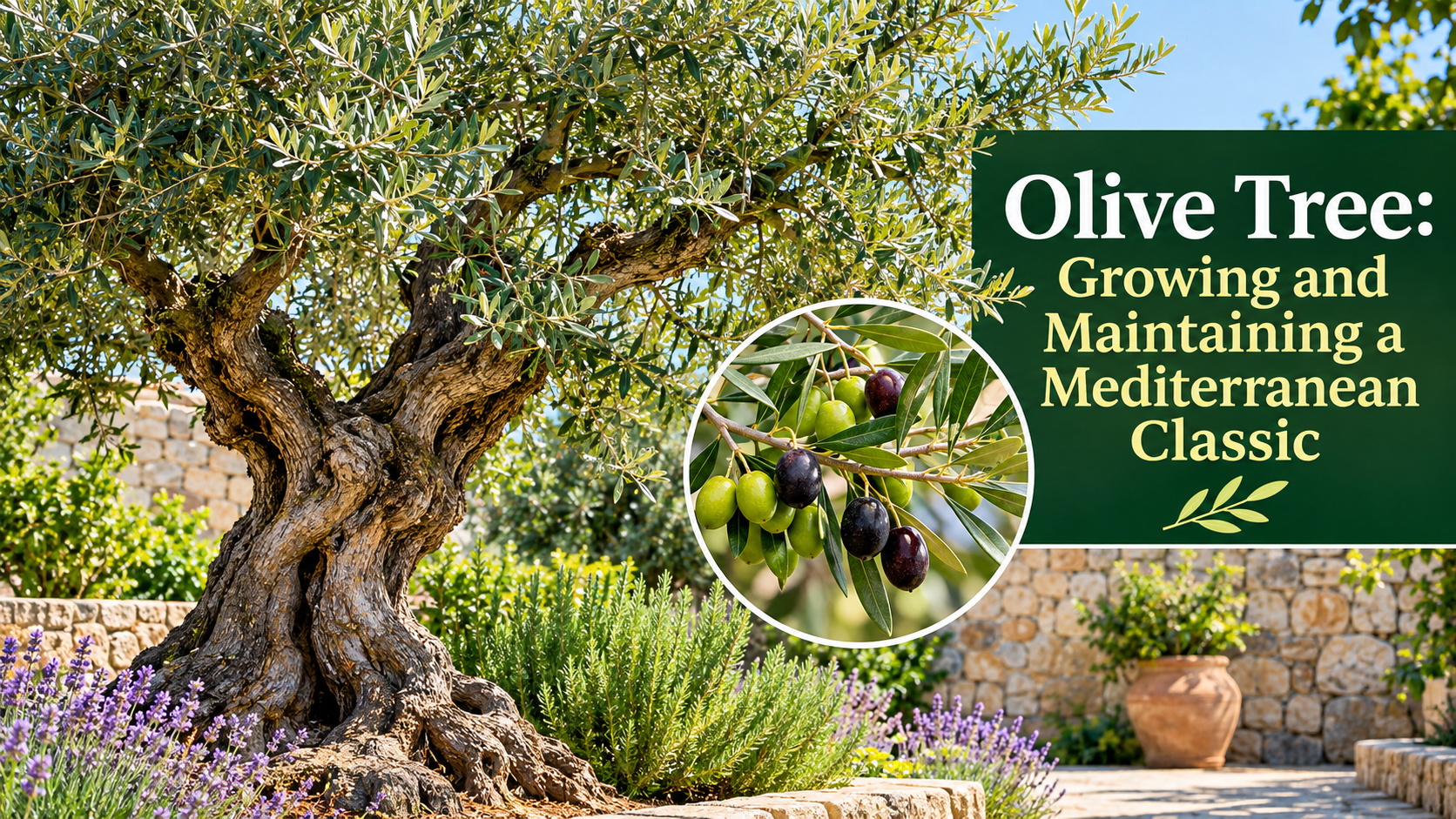
Olive Tree: Growing and Maintaining a Mediterranean Classic

The olive tree (Olea europaea) is one of the most iconic plants of the Mediterranean region. Admired for its silvery-green leaves, sculptural trunk, and valuable fruit, it has been cultivated for thousands of years.
Olive trees are valued for their longevity, ornamental beauty, and ability to tolerate drought once established. They can be planted in gardens, grown in large containers, or incorporated into Mediterranean-style landscapes.
Although olive trees are relatively low maintenance, successful cultivation depends on choosing the right location, providing excellent drainage, managing irrigation, and pruning correctly.
1. Olive Tree at a Glance
| Scientific Name | Olea europaea |
|---|---|
| Family | Oleaceae |
| Plant Type | Evergreen tree |
| Native Region | Mediterranean region |
| Sunlight | Full sun, ideally 6–8+ hours daily |
| Soil | Well-drained sandy or loamy soil |
| Water Needs | Moderate during establishment; lower once mature |
| Growth Rate | Slow to moderate |
| Mature Height | Commonly 5–10 metres, depending on variety and pruning |
| Propagation | Cuttings, grafting, and seeds |
| Uses | Ornamental landscaping, table olives, and olive oil |
2. Characteristics of the Olive Tree

Olive trees are recognized by their narrow evergreen leaves, which have dark green upper surfaces and lighter, silvery undersides. This foliage creates a distinctive appearance in bright sunlight.
As the tree ages, its trunk often develops a deeply textured, twisted form. Older specimens may become hollow while continuing to produce healthy branches.
Under favorable conditions, olive trees can survive for centuries. Some historic trees are believed to be more than one thousand years old, although determining their exact ages can be difficult.
3. Choosing the Best Location
Sunlight: Olive trees thrive in full sun. Choose a location receiving at least six to eight hours of direct sunlight daily.
Soil: Good drainage is essential. Olive trees tolerate relatively poor soils but struggle when roots remain saturated.
Spacing: Allow sufficient room for the canopy and root system to expand. Spacing varies by cultivar and intended pruning style.
Air circulation: Avoid overcrowding trees against walls or dense vegetation. Good airflow helps maintain healthy foliage.
Heavy clay soil may require improved drainage or planting on a raised mound. Avoid locations where standing water regularly collects.
4. How to Plant an Olive Tree
- Choose a healthy tree: Select a nursery-grown specimen with healthy foliage and a well-developed root system.
- Prepare the hole: Dig approximately twice as wide as the root ball, but no deeper.
- Check the roots: Gently loosen circling roots where necessary.
- Position the tree: Keep the top of the root ball level with or slightly above the surrounding ground.
- Backfill: Replace the soil, ensuring the trunk base is not buried.
- Water: Irrigate thoroughly after planting.
- Mulch: Add an organic mulch layer while keeping it away from the trunk.
In Mediterranean climates, autumn and spring are often suitable planting seasons. In very hot regions, cooler months are generally better for establishing young trees.
5. Watering and Irrigation
Although olive trees are drought tolerant, young specimens require consistent moisture while developing their roots.
Young Olive Trees
Water deeply when necessary to keep the root zone adequately moist without creating waterlogged conditions. Frequency depends on soil type, temperature, rainfall, and tree size.
Established Olive Trees
Mature trees can tolerate relatively long dry periods. However, irrigation during prolonged drought can improve tree health and support fruit production.
Signs of Incorrect Watering
- Excessive watering: Yellowing leaves, weak growth, and possible root rot.
- Insufficient watering: Wilting, leaf drop, and poor fruit development.
- Correct watering: Healthy foliage and steady seasonal growth.
Important: Always inspect soil moisture before watering. Fixed irrigation schedules should be adjusted to actual conditions.
6. Fertilizing Olive Trees
Olive trees do not generally require heavy fertilization. Trees growing in fertile soil may need little supplemental feeding.
Where nutrient deficiencies are confirmed, an appropriate balanced fertilizer can be applied during active growth.
Container-grown olive trees may require more regular nutrient replacement because watering gradually removes nutrients from the potting mixture.
Avoid excessive nitrogen fertilizer, which can encourage leafy growth at the expense of flowering and fruit production.
7. Pruning and Maintaining Shape
Pruning improves sunlight penetration, airflow, and the overall appearance of the tree.
Remove dead, damaged, diseased, or crossing branches. Thin overcrowded growth and unwanted shoots emerging from the trunk base.
For ornamental trees, light shaping is usually sufficient. Fruit-producing trees may require more structured canopy management.
Olive trees should not be heavily pruned without a clear purpose, as excessive cutting can reduce future harvests and stimulate unwanted upright shoots.
In regions with winter frost, major pruning is generally best performed after the main frost risk has passed.
8. Growing an Olive Tree in a Pot
Olive trees can be cultivated successfully in large containers, making them suitable for patios, courtyards, and terraces.
- Choose a large container with drainage holes.
- Use a free-draining soil-based potting mixture.
- Place the pot in full sunlight.
- Monitor moisture regularly, particularly during hot weather.
- Refresh the growing medium or repot when necessary.
- Use careful pruning to maintain a manageable shape.
Container-grown trees usually need closer watering attention than those planted directly in the ground.
9. Growing Olive Trees in Hot Climates
Olive trees are naturally adapted to warm, relatively dry Mediterranean summers. This makes them attractive ornamental plants for many landscapes in the Middle East.
However, extremely hot desert environments, including parts of the United Arab Emirates, can create additional challenges.
Managing Extreme Heat
Young olive trees need sufficient irrigation during their first growing seasons. Container-grown plants may benefit from protection against intense reflected afternoon heat.
Soil Salinity
Olives tolerate some soil salinity, but excessive salt accumulation can damage roots and leaves. Good drainage and suitable irrigation-water quality are important.
Winter Chilling
Many olive cultivars require a period of cooler winter temperatures for reliable flower development. In extremely warm winter climates, trees may grow well but produce limited fruit.
UAE growing tip: Olive trees can be grown as attractive landscape specimens, but reliable fruit production should not be assumed without selecting locally suitable cultivars.
10. Olive Tree Flowers and Pollination

Olive trees produce clusters of small cream-colored flowers. Flowering typically occurs during spring in Mediterranean climates, although timing varies by location.
Some cultivars are self-fertile, while others benefit from compatible pollinating varieties.
Pollination, seasonal temperatures, tree health, and water availability all influence fruit set.
Olive trees can also show alternate bearing, producing a heavy crop one year followed by a lighter crop the next.
11. Olive Fruit Development and Harvesting

Olives usually begin green and gradually change color as they ripen, depending on the cultivar.
The ideal harvest stage depends on whether the fruit will be processed as table olives or used for olive oil.
Green olives are generally collected before full ripening, while darker olives are harvested later in the maturation process.
Food safety: Fresh olives are naturally bitter and are not normally eaten directly from the tree. Table olives must be prepared using a tested curing method and handled safely during storage.
12. How to Propagate Olive Trees
Olive trees can be propagated through cuttings, grafting, or seeds.
For home gardeners who want to reproduce a particular variety, propagation from cuttings is often the preferred method.
Propagation by Cuttings
- Select a healthy, non-flowering shoot.
- Take a cutting approximately 10–15 cm long.
- Remove leaves from the lower portion.
- Apply suitable rooting hormone if desired.
- Insert the cutting into a free-draining propagation medium.
- Maintain moderate humidity and bright indirect light.
- Avoid overwatering while roots develop.
Rooting may take several weeks or longer depending on temperature, cultivar, and propagation conditions.
Seed propagation is possible, but seedlings may differ from their parent trees and can take longer to reach maturity.
13. Common Olive Tree Problems
| Problem | Possible Cause | Recommended Action |
|---|---|---|
| Yellow leaves | Excess water or nutrient imbalance | Check drainage and soil moisture |
| Brown leaf tips | Drought stress or salinity | Review irrigation and water quality |
| Leaf drop | Environmental or root stress | Inspect growing conditions |
| Blackened leaves | Sooty mold associated with insect honeydew | Check for scale or other sap-feeding insects |
| Root rot | Waterlogged soil | Improve drainage and irrigation practices |
| Few or no olives | Insufficient chilling, pollination, or immaturity | Review cultivar and growing conditions |
14. Seasonal Olive Tree Maintenance
| Season | Maintenance Tasks |
|---|---|
| Spring | Inspect new growth, assess nutrients, monitor flowering, and adjust irrigation. |
| Summer | Monitor water requirements, heat stress, pests, and soil moisture. |
| Autumn | Harvest fruit when appropriate and prepare trees for cooler conditions. |
| Winter | Reduce irrigation when growth slows and avoid unnecessary fertilization. |
These seasonal recommendations reflect typical Mediterranean growing patterns. In desert or tropical climates, care should be adapted to local conditions.
15. Frequently Asked Questions
Can olive trees grow indoors?
Olive trees generally perform better outdoors. Indoor cultivation is challenging because they require abundant direct sunlight and suitable seasonal conditions.
How long can an olive tree live?
Olive trees can live for centuries under favorable conditions. Some historic specimens are believed to be more than one thousand years old.
Do olive trees require a lot of water?
Established trees are relatively drought tolerant. However, young trees and container-grown specimens need more consistent irrigation.
Why is my olive tree not producing olives?
Possible reasons include insufficient winter chilling, lack of compatible pollination, immaturity, excessive pruning, or environmental stress.
Can olive trees grow in sandy soil?
Yes. Olive trees can grow in sandy soil provided the root zone receives adequate moisture and nutrients. Sandy soils typically drain rapidly and may need closer irrigation management.
Are olive trees suitable for small gardens?
Yes. Compact cultivars and container-grown olive trees are useful options for small gardens and patios.
Conclusion
The olive tree is a remarkable evergreen species that combines Mediterranean character, longevity, and practical landscape value.
Its care requirements are relatively straightforward: plenty of sunlight, excellent drainage, thoughtful irrigation, and periodic pruning.
With proper establishment and ongoing maintenance, an olive tree can remain an attractive part of the landscape for many years.
In very hot climates, gardeners should pay particular attention to soil salinity, summer heat, and watering requirements. When these factors are managed appropriately, olive trees can become enduring features of gardens and courtyards.
References and Further Reading
- Royal Horticultural Society — How to Grow Olives
- University of Florida IFAS — Olives
- University of California — Olive Pest Management
Image Credits
Photographs sourced from Wikimedia Commons. Credits and original file pages are provided below each photograph. Reuse must follow the applicable license terms, including attribution and share-alike conditions where required.