
Views: 13
Rubber Plant: Indoor Care and Propagation Guide
The Rubber Plant (Ficus elastica) is one of the most attractive and popular indoor plants. Known for its large, glossy leaves and elegant upright growth, this tropical evergreen can transform a living room, office, or indoor garden into a lush green space.
Native to tropical regions of South and Southeast Asia, the rubber plant is relatively easy to maintain when provided with proper lighting, watering, and soil conditions.
In this comprehensive guide, discover how to grow a healthy rubber plant indoors, propagate new plants, identify common problems, and maintain beautiful foliage throughout the year.

1. Rubber Plant Overview
The rubber plant belongs to the Moraceae family, which also includes figs. In its natural environment, Ficus elastica can become a massive tree, but indoors it is usually grown as a decorative houseplant.
| Scientific Name | Ficus elastica |
|---|---|
| Common Name | Rubber Plant, Rubber Tree, Rubber Fig |
| Family | Moraceae |
| Plant Type | Tropical evergreen tree |
| Indoor Height | Usually 0.6–3 meters; potentially taller |
| Light | Bright, indirect sunlight |
| Watering | Allow upper soil to dry between watering |
| Temperature | Approximately 18–27°C preferred |
| Soil | Well-draining, aerated potting mix |
| Propagation | Stem cuttings and air layering |
| Toxicity | Sap can irritate skin and is harmful if chewed by pets |
2. Best Light Conditions for Rubber Plants
Rubber plants prefer bright, indirect sunlight. Placing the plant near an east-facing window usually provides an excellent balance of light without prolonged exposure to intense afternoon sunshine.
Although the plant tolerates medium-light conditions, prolonged low light can result in slower growth, smaller leaves, and elongated stems.
Ideal Lighting Conditions
- Bright, indirect sunlight for most of the day.
- Gentle morning sunshine is generally beneficial.
- Use sheer curtains to diffuse strong afternoon sunlight.
- Rotate the pot periodically to encourage balanced growth.
- Provide brighter conditions for variegated varieties.
3. How to Water a Rubber Plant
Proper watering is one of the most important aspects of rubber plant care. Excess water can cause root damage, while prolonged dryness may lead to wilting and leaf drop.
Step-by-Step Watering Guide
- Check the upper 2–5 cm of soil with your finger.
- If it feels dry, water thoroughly until excess water exits the drainage holes.
- Allow the pot to drain completely.
- Empty any water collected in the saucer.
- Repeat only when the upper soil begins to dry again.
Watering frequency depends on temperature, available sunlight, pot size, soil composition, and seasonal growth.
Signs of Overwatering
- Yellowing leaves.
- Persistently wet potting soil.
- Dropping foliage.
- Soft, weakened stems.
- Unpleasant odor from the soil.
Signs of Underwatering
- Dry soil throughout the container.
- Drooping or curling leaves.
- Dry, brown leaf edges.
- Reduced growth.
Always inspect the soil before changing your watering routine because several environmental problems can produce similar symptoms.
4. Choosing the Right Soil and Pot
Rubber plants grow best in soil that retains some moisture while allowing excess water to drain freely.
A practical indoor potting mixture can contain:
- Two parts quality houseplant potting mix.
- One part perlite for drainage and aeration.
- One part fine orchid bark for improved soil structure.
Use a pot with drainage holes. When repotting, select a container only slightly larger than the existing root system.
Repotting is generally necessary when roots become crowded, the potting medium deteriorates, or the plant dries unusually quickly despite proper watering.

5. Temperature and Humidity Requirements
As a tropical plant, Ficus elastica grows best in warm environments with relatively stable temperatures.
An indoor temperature of approximately 18–27°C is suitable for healthy growth.
Avoid exposing rubber plants to cold air-conditioning drafts, sudden temperature fluctuations, or prolonged cold conditions.
Humidity Tips
- Maintain normal to moderately humid indoor conditions.
- Keep the plant away from direct air-conditioning airflow.
- Consider a humidifier if indoor air becomes extremely dry.
- Group compatible tropical houseplants together.
- Ensure adequate air circulation to discourage fungal problems.
Rubber plants are generally adaptable to typical household humidity, making them practical indoor plants in many climates.
6. Fertilizing Rubber Plants
Rubber plants benefit from occasional feeding during periods of active growth.
Use a balanced fertilizer formulated for indoor foliage plants and follow the manufacturer’s dilution instructions.
- Fertilize approximately once a month during active growth when needed.
- Reduce feeding when growth slows.
- Avoid excessive fertilizer applications.
- Do not fertilize plants suffering from severe root damage.
- Periodically flush accumulated fertilizer salts from the soil with clean water.
Overfertilization can damage roots and cause brown leaf margins, so moderate feeding is usually preferable.
7. How to Propagate a Rubber Plant
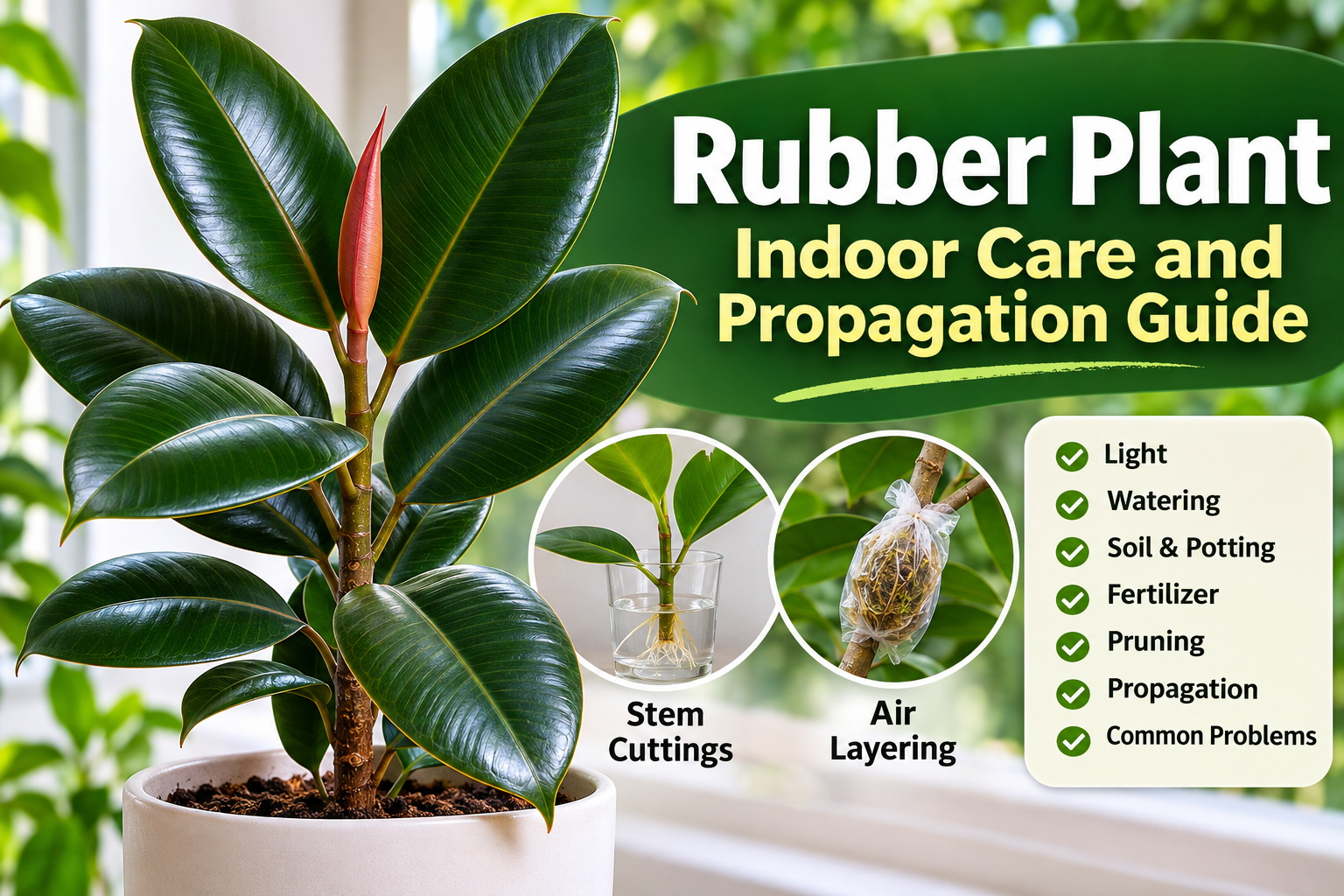
Rubber plants can be propagated through stem cuttings and air layering. Propagation is an effective way to create additional plants or rejuvenate an older specimen.
Method 1: Propagation Using Stem Cuttings
Stem cuttings are a straightforward method for producing new rubber plants.
- Select a healthy stem containing at least one leaf and a node.
- Use sterilized pruning shears to make a clean cut below the node.
- Allow excess milky sap to stop flowing, handling the stem with gloves.
- Remove leaves that would otherwise be submerged in water or buried in soil.
- Place the cutting in water or a moist, well-aerated propagation medium.
- Keep it warm and provide bright, indirect light.
- Maintain moisture without waterlogging the cutting.
- Once adequate roots develop, transplant into a suitable potting mix.
Rooting may take several weeks or longer. Cuttings with healthy nodes have the potential to develop complete new plants.
Method 2: Air Layering
Air layering is especially useful when propagating a large rubber plant with thick, woody stems.
- Select a healthy section of the main stem.
- Carefully make a small wound below a node.
- Apply rooting hormone if desired.
- Surround the wounded area with moist sphagnum moss.
- Wrap the moss in clear plastic and secure both ends.
- Monitor moisture and root development.
- Once a substantial root system forms, cut below the rooted section.
- Pot the new plant in a well-draining growing medium.
The advantage of air layering is that the developing plant remains connected to the parent while forming roots.
8. Pruning and Shaping Your Rubber Plant
Indoor rubber plants can become tall and occasionally develop sparse lower stems. Pruning helps manage their height and encourages branching.
- Remove dead or badly damaged leaves.
- Cut stems just above a suitable node.
- Prune during active growth when possible.
- Use sharp, disinfected pruning tools.
- Wear gloves to avoid contact with irritating latex sap.
After pruning, new shoots may develop below the cut, creating a fuller plant.

9. Cleaning Rubber Plant Leaves
Because rubber plants have large, smooth leaves, they can accumulate dust over time.
Dust reduces the amount of light reaching the leaf surface and can make the plant appear dull.
Use a soft, damp cloth to gently wipe each leaf while supporting it with your other hand.
Avoid harsh cleaning products and excessive use of leaf-shine sprays.
10. Common Rubber Plant Problems
| Problem | Possible Cause | Solution |
|---|---|---|
| Yellow Leaves | Overwatering or poor drainage | Check moisture and inspect roots if necessary. |
| Brown Leaf Edges | Dryness, salt buildup, or sun exposure | Check soil, water quality, and light. |
| Leaf Drop | Environmental changes or watering stress | Maintain stable growing conditions. |
| Slow Growth | Low light or seasonal slowdown | Improve lighting and reassess care. |
| Leggy Stems | Insufficient sunlight | Provide brighter indirect light and prune if appropriate. |
| Sticky Leaves | Possible scale insects or mealybugs | Inspect foliage and treat identified pests. |
Sunburn and Leaf Damage
Rubber plants may develop pale, brown, or dry patches when exposed to sunlight that is too intense, especially after a sudden move from a shaded location.

Move the plant to an area with filtered light and introduce stronger lighting gradually. Existing damaged tissue generally will not recover its original appearance, but healthy new leaves can continue developing.
11. Popular Rubber Plant Varieties
Ficus elastica ‘Robusta’
A classic cultivar featuring large, deep-green, glossy foliage and a strong upright growth habit.
Ficus elastica ‘Burgundy’
Popular for its dark green to burgundy-toned leaves, giving it a dramatic appearance in modern indoor spaces.
Variegated Rubber Plants
Variegated cultivars display combinations of green, cream, pale yellow, and sometimes pink tones. They generally require brighter indirect light than uniformly green varieties.

Ficus elastica ‘Ruby’
This colorful cultivar features green, cream, and pink or reddish variegation. Good indirect lighting helps maintain its decorative appearance.
12. Rubber Plant Care in Hot Climates
Rubber plants are well suited to indoor environments in warm regions, provided they are protected from extreme temperatures and excessive direct sun.
For homes in the UAE and other hot climates:
- Place the plant near a bright window with filtered light.
- Avoid strong afternoon sunlight during summer.
- Keep the plant away from direct air-conditioning drafts.
- Check soil moisture regularly rather than watering on a rigid schedule.
- Ensure proper drainage and air circulation.
- Reduce watering when indoor conditions slow growth.
Indoor rubber plants can grow throughout much of the year when lighting, temperature, and moisture remain favorable.
13. Are Rubber Plants Toxic to Pets?
Yes. Rubber plants contain a milky latex sap that can irritate skin and cause mouth or gastrointestinal irritation if pets chew the leaves or stems.
Keep rubber plants away from curious cats, dogs, and small children.
When pruning or propagating, wear gloves and avoid touching your eyes after handling the plant.
14. Frequently Asked Questions
How fast does a rubber plant grow indoors?
Rubber plants can grow relatively quickly under favorable conditions. Growth depends on available light, temperature, nutrients, container size, and plant maturity.
Can rubber plants grow in low light?
They can tolerate medium-light conditions, but very low light typically results in reduced growth and weaker stems.
How often should I repot my rubber plant?
Repot when the plant becomes root-bound, the growing medium deteriorates, or watering becomes difficult to manage. Young plants may require repotting more frequently than mature specimens.
Can I propagate a rubber plant in water?
Yes. Healthy stem cuttings with nodes can develop roots in water. Once sufficient roots form, the cutting can be transferred to potting soil.
Why is my rubber plant dropping leaves?
Leaf drop can occur because of overwatering, insufficient moisture, sudden temperature changes, cold drafts, or major changes in lighting conditions.
Should I mist my rubber plant?
Regular misting is not essential. Maintaining stable humidity and appropriate watering is usually more effective than briefly wetting the foliage.
15. Final Rubber Plant Care Tips
The rubber plant is an excellent choice for anyone looking to introduce bold tropical foliage into an indoor environment.
For long-term success, focus on the following essentials:
- Provide bright, indirect sunlight.
- Water only after the upper soil begins to dry.
- Use well-draining soil and pots with drainage holes.
- Maintain stable indoor temperatures.
- Clean leaves occasionally.
- Prune strategically to manage size and encourage branching.
- Propagate healthy stems through cuttings or air layering.
- Inspect foliage regularly for pests and signs of stress.
With consistent care, Ficus elastica can become a beautiful and long-lasting addition to a home, office, or indoor plant collection.
References and Image Credits
For additional horticultural guidance:
Photographs used in this guide:
- Karlfonza — CC BY-SA 4.0
- Mokkie — CC BY-SA 3.0
- Pseudopanax — Public Domain
- Secretlondon — CC BY-SA 4.0
- Krzysztof Ziarnek, Kenraiz — CC BY-SA 4.0
Images are credited to their respective photographers and licensed according to their Wikimedia Commons file pages. Share-alike conditions apply to relevant adaptations.