
Views: 0
Anthurium: How to Grow Healthy Tropical Flowers
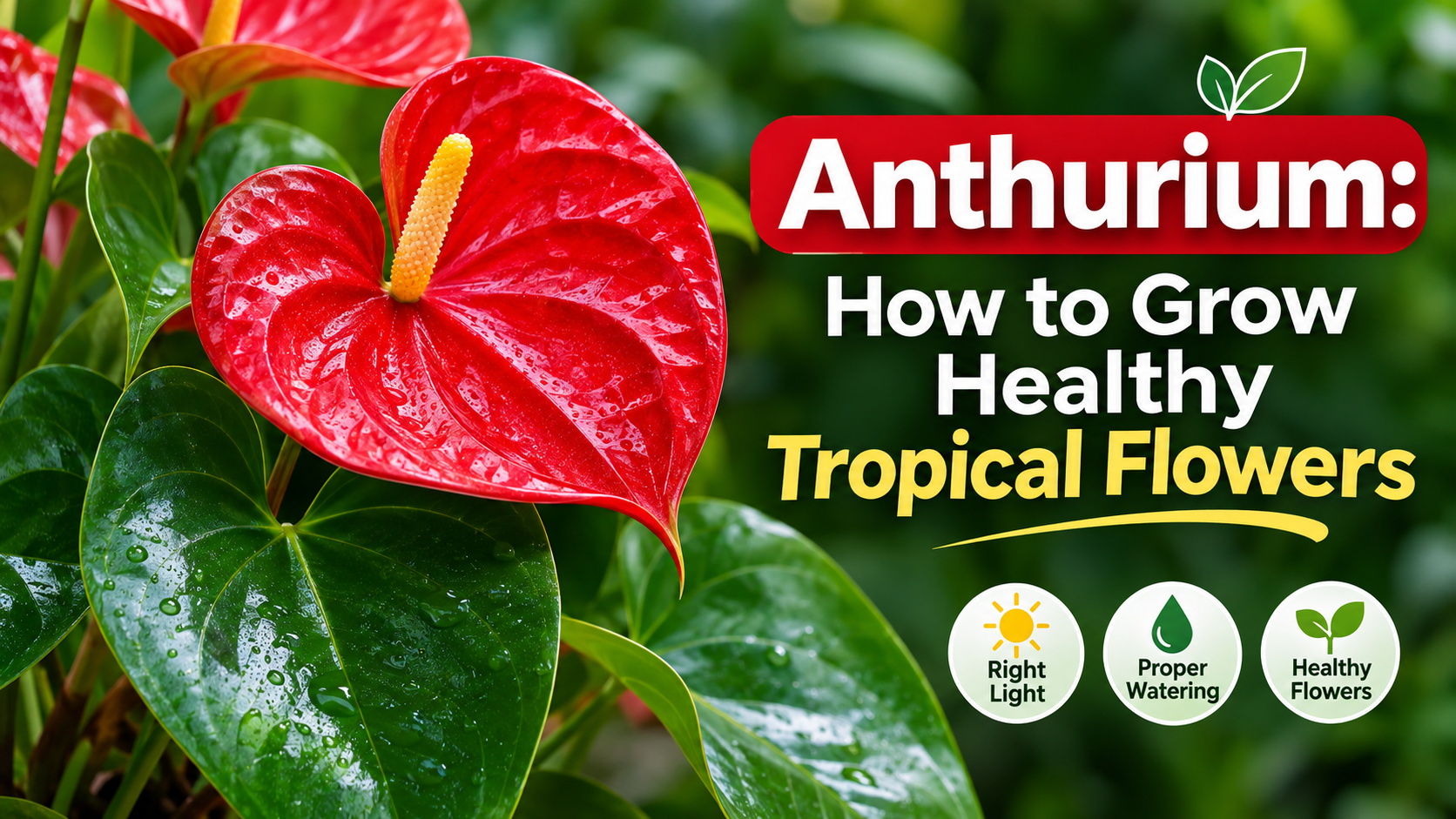
Anthurium, also known as the flamingo flower or laceleaf, is a beautiful tropical plant admired for its glossy green leaves and vibrant, long-lasting blooms. Available in shades of red, pink, white, and orange, anthuriums add elegance and tropical character to homes, offices, and indoor gardens.
Native to tropical regions of the Americas, anthuriums flourish in warm, humid environments with filtered sunlight. With proper care, many flowering varieties can produce colorful displays throughout the year.

1. Understanding the Anthurium Plant
Anthurium belongs to the Araceae family, which includes many popular tropical foliage plants. In nature, numerous anthurium species grow in warm, humid forests, sometimes as epiphytes attached to trees.
The most recognizable feature of a flowering anthurium is its colorful, heart-shaped spathe. Although commonly called a flower, the spathe is actually a modified leaf. The tiny true flowers grow on the central spike, known as the spadix.
Popular Anthurium Varieties
- Anthurium andraeanum: Known for colorful, heart-shaped spathes and glossy leaves.
- Anthurium scherzerianum: Distinguished by its curled or spiraling spadix.
- Anthurium crystallinum: Grown mainly for velvety leaves with prominent pale veins.
- Anthurium clarinervium: Valued for thick, dark-green heart-shaped foliage with contrasting veins.

2. Ideal Growing Conditions
Healthy anthuriums depend on the right combination of light, temperature, humidity, and soil moisture. Recreating their tropical environment encourages strong leaves and consistent flowering.
| Growing Factor | Ideal Conditions |
|---|---|
| Light | Bright, indirect sunlight |
| Temperature | 18–30°C |
| Humidity | Preferably around 60% or higher |
| Watering | When the upper potting mix begins drying |
| Soil | Airy, moisture-retentive, well-draining |
| Fertilizer | Diluted balanced fertilizer during active growth |
| Flowering | Possible year-round under suitable conditions |
3. Choosing the Best Location and Sunlight
Anthuriums grow best in bright, filtered sunlight. An east-facing window is often suitable because it provides gentle morning light.
Near a south- or west-facing window, a sheer curtain can protect the plant from intense sunlight.
Signs of Incorrect Lighting
- Too little light: Slow growth and limited flowering.
- Too much direct sunlight: Scorched, bleached, or brown patches on foliage.
- Suitable light: Healthy green leaves and regular new growth.
Rotate the container occasionally to encourage balanced growth.
4. How to Water Anthurium Properly
Overwatering is one of the most common causes of anthurium problems. Although these plants appreciate moisture, their roots also need oxygen.
Check the upper few centimeters of the potting mix before watering. When that layer starts to dry, water thoroughly and allow all excess moisture to drain away.
Watering Tips
- Use a container with drainage holes.
- Never leave the plant standing in collected water.
- Water more frequently when warmth and light increase evaporation.
- Reduce watering when growth slows or the environment becomes cooler.
- Consider rainwater or filtered water if tap water is very hard.
Always judge watering needs by the condition of the soil rather than following a rigid calendar.
5. Choosing the Best Potting Mix
Many anthuriums naturally grow with excellent air circulation around their roots. Dense, compacted soil can trap excessive water and cause root damage.
A practical growing mixture combines:
- Two parts quality peat-free acidic potting compost.
- One part orchid bark.
- One part perlite or another suitable aeration material.
The bark and perlite help keep the mixture open, while the compost retains enough moisture to support growth.
Repot when the plant becomes root-bound or the growing medium deteriorates. Choose a container only slightly larger than the existing root system.
6. Temperature and Humidity
Anthuriums thrive in warm conditions, generally between 18°C and 30°C. Avoid prolonged exposure to cold drafts, intense heat, or sudden temperature changes.
High humidity supports healthy tropical foliage. A room humidifier can help in dry indoor environments.
Grouping tropical plants together may also help maintain a slightly more humid microclimate.
Growing Anthurium in the UAE and Other Hot Climates
In very hot climates, including the United Arab Emirates, anthuriums usually perform better indoors than on exposed balconies during summer.
Protect the plant from intense direct sunlight and outdoor heat. In air-conditioned rooms, keep it away from vents that blow cold, dry air directly onto its leaves.
A bright indoor position with stable warmth and sufficient humidity is generally ideal.
7. How to Encourage Anthurium Flowering
Many flowering anthurium varieties can bloom repeatedly when their growing conditions remain favorable.
Tips for More Flowers
- Provide bright indirect sunlight.
- Maintain consistent warmth.
- Keep humidity at a suitable level.
- Apply diluted fertilizer during active growth.
- Avoid keeping the potting mix constantly saturated.
- Remove aging or damaged flower stalks with clean tools.
If the plant grows healthy leaves but rarely flowers, inadequate light is one of the first factors to investigate.
8. Anthurium Foliage Varieties
Not all anthuriums are grown primarily for colorful spathes. Some species are prized for their spectacular foliage.
Anthurium crystallinum, for example, develops attractive, velvety leaves with prominent veins. These foliage varieties may have slightly different environmental preferences from common flowering hybrids.

9. Propagating Anthurium Plants
Division is a straightforward method of propagating mature anthuriums that have developed multiple growing sections.
Step-by-Step Propagation
- Carefully remove the plant from its pot.
- Loosen the roots gently without excessive tearing.
- Identify natural divisions with healthy roots and growing points.
- Separate suitable sections using clean tools if necessary.
- Plant each division in a fresh, airy potting mixture.
- Maintain warmth, indirect light, and adequate humidity while the divisions establish.
Some anthurium species can also be propagated from appropriate stem sections containing viable nodes.
10. Common Anthurium Problems and Solutions
| Problem | Possible Cause | Solution |
|---|---|---|
| Yellow leaves | Overwatering, aging, or root stress | Check roots and soil drainage |
| Brown leaf tips | Dry air or mineral buildup | Improve humidity and assess water quality |
| No flowers | Insufficient light or other growing stress | Improve indirect light and overall care |
| Wilting | Dry soil or damaged roots | Inspect moisture and root health |
| Scorched leaves | Strong direct sunlight | Move to filtered light |
| Sticky leaves or visible insects | Scale, mealybugs, or other pests | Isolate the plant and apply appropriate treatment |
Check the undersides of leaves regularly for common houseplant pests. Early identification can prevent serious infestations.
11. Are Anthuriums Safe for Pets?
Anthuriums contain insoluble calcium oxalate crystals. Chewing plant tissue may cause irritation of the mouth, tongue, and digestive tract.
Keep these plants away from cats, dogs, and young children. Wear gloves when pruning if you have sensitive skin.
12. Frequently Asked Questions
How often should I water Anthurium?
Water when the upper layer of potting mix begins drying. The frequency depends on temperature, humidity, pot size, and growing conditions.
Can Anthurium grow indoors?
Yes. Anthuriums are excellent indoor plants when they receive sufficient indirect sunlight, warmth, and humidity.
Why is my Anthurium not flowering?
Low light, poor root health, inadequate nutrition, or environmental stress can reduce flowering.
How long do Anthurium flowers last?
The colorful spathes can remain attractive for several weeks, sometimes longer, depending on the variety and growing conditions.
Can Anthurium survive in air-conditioned rooms?
Yes, provided the plant remains warm enough and is protected from direct cold drafts and excessively dry air.
Should I mist Anthurium leaves every day?
Daily misting is not necessary. Stable ambient humidity is generally more effective than occasional spraying.
Conclusion
Anthurium is a rewarding tropical plant that combines elegant foliage with colorful, long-lasting displays. With bright indirect light, careful watering, warm temperatures, and suitable humidity, many varieties can thrive indoors for years.
Whether you choose a traditional red flowering anthurium or a dramatic foliage species, understanding the plant’s natural growing preferences is the key to maintaining healthy roots, beautiful leaves, and consistent growth.