
Views: 7
Calathea: How to Care for Beautiful Patterned Leaves

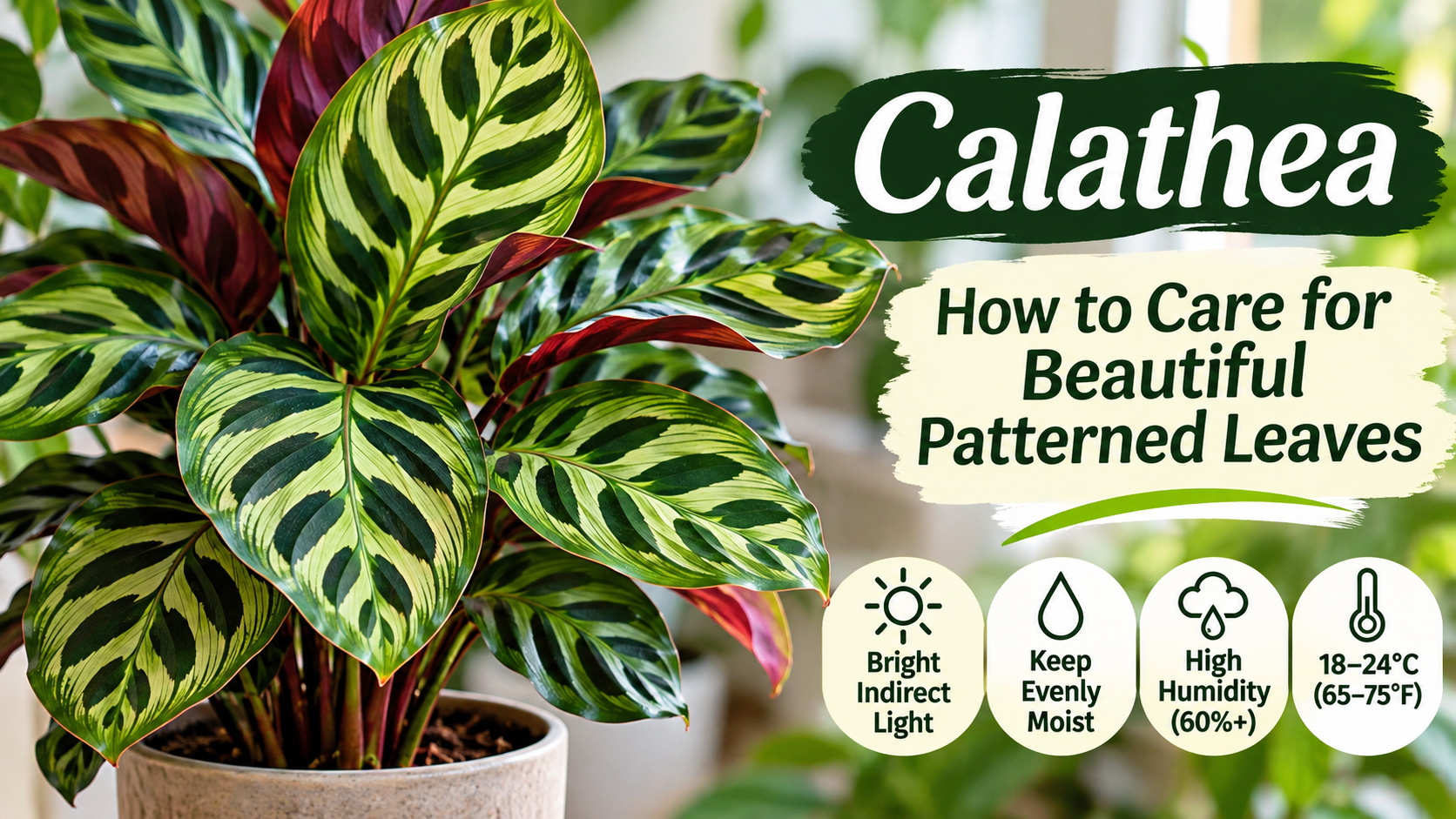
Calathea is among the most beautiful tropical houseplants, admired for its extraordinary leaf patterns, rich colors, and elegant appearance. Its foliage features delicate stripes, feather-like markings, and stunning combinations of green, silver, purple, and pink.
These plants are especially popular among indoor gardening enthusiasts because their ornamental leaves can transform an ordinary room into a lush tropical space.
Although Calathea plants are sometimes considered difficult to maintain, understanding their basic needs makes growing them much easier. With the right balance of light, moisture, humidity, and temperature, you can enjoy beautiful foliage throughout the year.
What Makes Calathea Special?
Calathea belongs to the Marantaceae family, commonly known as the prayer plant family. Many plants traditionally sold as Calathea are now botanically classified in the genus Goeppertia, although their familiar commercial names remain widely used.
One of their most fascinating characteristics is the movement of their leaves throughout the day. Many varieties raise their leaves during the evening and lower them during daylight hours. This natural movement is called nyctinasty.
The patterns on Calathea leaves are natural features that vary between species. Some plants display symmetrical stripes, while others have oval spots, feather-like shapes, or colorful undersides.
Popular Calathea Varieties
1. Calathea Orbifolia

Calathea orbifolia is famous for its large, rounded leaves decorated with broad silver-green stripes. Its impressive foliage makes it an excellent statement plant for living rooms, offices, and tropical indoor gardens.
This variety appreciates consistent humidity and protection from direct sunlight.
2. Calathea Makoyana — Peacock Plant

Known as the Peacock Plant, Calathea makoyana features oval leaves decorated with dark green feather-like patterns. The undersides often display reddish-purple coloring, creating an attractive contrast.
Its elaborate leaf markings make this one of the most recognizable Calathea varieties.
3. Calathea Ornata — Pinstripe Plant

Calathea ornata has dark green leaves with delicate pink or pale pinstripes. Its sophisticated appearance makes it particularly attractive as a decorative indoor plant.
Healthy plants develop vibrant leaf patterns when protected from excessive light and dry air.
4. Calathea Lancifolia — Rattlesnake Plant

The Rattlesnake Plant, previously called Calathea lancifolia, has long, narrow leaves with attractive wavy edges and dark green oval markings.
Its unusual foliage gives it a distinctive appearance and makes it an excellent addition to collections of tropical houseplants.
Calathea Care Requirements at a Glance
| Care Factor | Recommendation |
|---|---|
| Light | Bright, indirect sunlight |
| Watering | Keep soil lightly and evenly moist |
| Humidity | Preferably around 60% or higher |
| Temperature | Approximately 18–24°C |
| Soil | Well-draining, moisture-retentive potting mix |
| Fertilizer | Diluted balanced fertilizer during active growth |
| Repotting | Approximately every 1–2 years, when needed |
1. Provide Bright, Indirect Light
In their natural habitat, Calathea plants grow beneath the canopy of tropical forests. This environment protects them from intense direct sunlight while providing filtered daylight.
Indoors, place your Calathea near a bright window where the sunlight is softened by curtains or surrounding shade.
- East-facing windows often provide suitable morning light.
- Use sheer curtains to filter strong afternoon sunlight.
- Avoid leaving leaves exposed to intense direct sun.
- Do not place plants in extremely dark corners.
Excessive sunlight may cause faded markings, scorched patches, and crispy leaf edges. Insufficient light can slow growth and reduce the plant’s overall vigor.
2. Water Calathea Correctly
Calathea prefers soil that remains lightly moist without becoming waterlogged. Maintaining this balance is important because both excessive dryness and standing water can damage the plant.
Check the upper 2–3 centimeters of soil regularly. When this layer begins to feel slightly dry, water thoroughly until excess water drains through the bottom of the pot.
Watering Tips
- Use a pot with drainage holes.
- Never allow the pot to remain in standing water.
- Reduce watering when growth slows.
- Check soil moisture instead of following a rigid schedule.
- Consider filtered, distilled, or rainwater if your tap water is very hard.
Some Calathea varieties are sensitive to mineral accumulation, which can contribute to brown tips and leaf damage.
3. Maintain High Humidity
Humidity is one of the most important environmental factors for Calathea. These tropical plants thrive in moist air, while prolonged exposure to dry conditions may cause curling leaves and brown edges.
Maintaining humidity around 60% or higher can help support healthy foliage, provided the room also has reasonable air circulation.
How to Improve Indoor Humidity
- Use a room humidifier.
- Group tropical houseplants together.
- Place the plant in a naturally humid, well-lit bathroom.
- Keep plants away from heating and air-conditioning vents.
- Monitor indoor humidity using a hygrometer.
Important for UAE homes: Air conditioning can significantly reduce indoor humidity. If you grow Calathea in Abu Dhabi, Dubai, or other hot locations, keep it away from direct AC airflow and monitor humidity regularly.
4. Choose the Best Soil for Calathea
Calathea needs a potting medium that retains sufficient moisture while allowing water to drain freely. Heavy, compacted soil can restrict root aeration and increase the risk of root rot.
A practical indoor potting mix can include:
- Quality indoor plant potting compost.
- Perlite for improved drainage and aeration.
- Fine orchid bark for added structure.
The ideal soil should feel airy and slightly moisture-retentive rather than dense or permanently wet.
5. Maintain Stable Temperatures
Calathea performs best in warm, stable indoor conditions. Temperatures around 18–24°C are generally suitable, although some varieties tolerate slightly warmer conditions.
Avoid cold drafts, extreme temperature changes, and direct exposure to heating or cooling vents.
Sudden environmental changes can stress the plant and may cause curled or damaged foliage.
6. Fertilize During Active Growth
Calathea benefits from moderate feeding during periods of active growth.
Apply a balanced houseplant fertilizer diluted according to the manufacturer’s recommendations, often at reduced strength, approximately once a month when the plant is growing well.
Avoid excessive fertilizer because mineral salts can accumulate in the potting mix and damage sensitive roots.
Reduce or stop fertilizing when the plant is not actively growing.
7. Repotting and Propagating Calathea
Most Calathea plants benefit from repotting when their roots become crowded or the potting mix deteriorates. This may be necessary approximately every one or two years, depending on the plant’s growth.
Choose a new container only slightly larger than the existing root ball and use fresh, well-draining potting mix.
How to Propagate Calathea
- Carefully remove a healthy, mature plant from its container.
- Gently separate the root clump into sections.
- Ensure each division has healthy roots and shoots.
- Plant each section in a suitable potting mix.
- Keep the divisions warm, humid, and protected from direct sunlight while they establish.
Division is the most practical propagation method for these plants. Ordinary leaf cuttings without the appropriate growing tissue will not develop into new Calathea plants.
Common Calathea Problems and Solutions
| Problem | Possible Cause | Solution |
|---|---|---|
| Brown leaf tips | Dry air, water quality, or inconsistent watering | Improve humidity and review watering habits |
| Yellow leaves | Overwatering, poor drainage, or natural aging | Check soil moisture and root health |
| Curling leaves | Dry soil, low humidity, or temperature stress | Check moisture and growing conditions |
| Faded patterns | Excessive direct sunlight | Move to filtered light |
| Drooping foliage | Water stress or root problems | Inspect soil and roots before watering |
| Speckled leaves and fine webbing | Possible spider mite infestation | Isolate and treat the affected plant |
How to Keep Calathea Leaves Beautiful
The main attraction of Calathea is its decorative foliage. Keeping the leaves healthy requires consistent care rather than complicated maintenance.
- Clean dusty leaves gently using a soft, damp cloth.
- Inspect leaves regularly for pests.
- Remove completely dead foliage with clean scissors.
- Avoid unnecessary changes in the plant’s location.
- Do not use harsh leaf-shine products.
- Keep humidity and watering conditions consistent.
Occasional older leaves may turn yellow and die as the plant produces new foliage. However, widespread discoloration or persistent curling can indicate environmental or root problems.
Is Calathea Suitable for Beginners?
Calathea can be a rewarding houseplant for beginners who are willing to monitor moisture, humidity, and lighting conditions.
It generally requires more attention than low-maintenance houseplants such as snake plants or pothos. However, once its growing environment becomes stable, routine care is relatively straightforward.
The most important lesson is consistency. Regularly checking the soil and observing the leaves will help you recognize problems before they become serious.
Frequently Asked Questions
How often should I water Calathea?
Water when the upper 2–3 cm of potting mix begins to dry. The frequency depends on temperature, humidity, pot size, and growing conditions.
Why are my Calathea leaves turning brown?
Brown edges may result from low humidity, mineral-rich water, inconsistent moisture, or fertilizer accumulation. Check several possible causes rather than assuming the plant needs more water.
Can Calathea grow in low light?
Calathea can tolerate some shade, but bright, indirect light generally supports stronger growth and healthy foliage.
Why do Calathea leaves move at night?
Many Calathea varieties display nyctinastic movement, raising or folding their leaves in response to daily light cycles.
Can I keep Calathea in an air-conditioned room?
Yes. Maintain stable temperatures and adequate humidity, and avoid positioning the plant directly in the path of cold, dry air.
Is Calathea safe for cats and dogs?
Calathea plants are generally considered non-toxic to cats and dogs, although eating plant material may still cause digestive upset.
Final Thoughts
Calathea is an exceptional choice for anyone who appreciates the beauty of tropical foliage. Its remarkable patterns, graceful leaf movement, and colorful appearance make it an attractive addition to indoor spaces.
While it requires attention to humidity, watering, and lighting, growing a healthy Calathea becomes much easier once the right environment is established.
With proper care, these beautiful plants can continue producing stunning patterned leaves and bring a refreshing tropical atmosphere into your home.
References and Further Reading
- Royal Horticultural Society — Calathea Growing Guide
- Royal Horticultural Society — Gardening Resources
- NC State Extension — Plant Toolbox
- Wikimedia Commons — Plant Photography
Image credits and licensing details are provided beneath each photograph. Consult the linked Wikimedia Commons file pages for the complete licensing terms.