
Views: 7
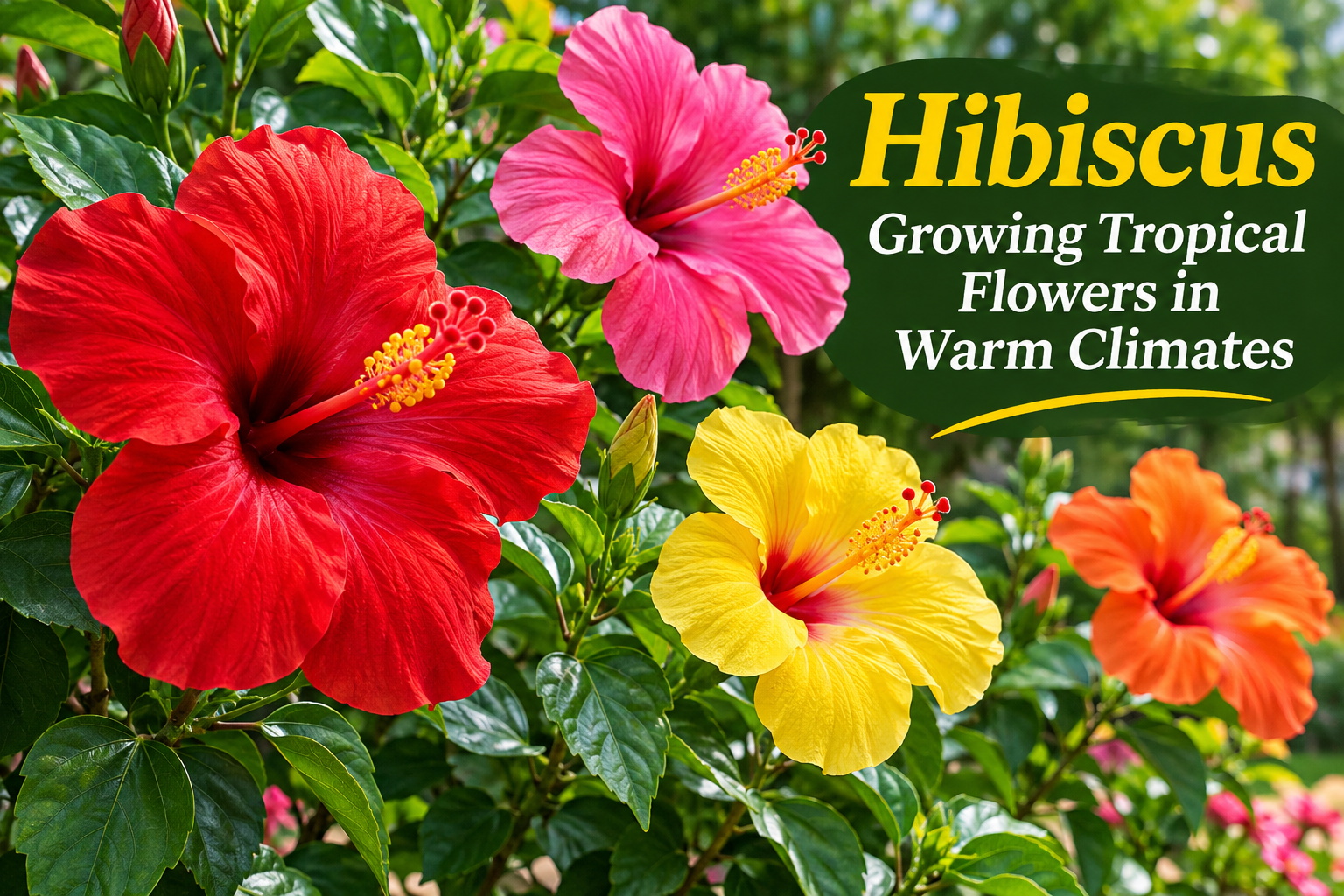
Hibiscus: Growing Tropical Flowers in Warm Climates
Hibiscus is one of the most spectacular flowering plants for tropical and subtropical gardens. Known for its large, colorful blossoms and glossy green leaves, hibiscus brings a vibrant tropical atmosphere to gardens, patios, balconies, and landscaped outdoor spaces.
The popular tropical hibiscus (Hibiscus rosa-sinensis) is especially suitable for warm regions. With appropriate sunlight, watering, fertilization, and pruning, these flowering shrubs can produce beautiful blooms repeatedly throughout their growing season.
In hot climates such as the UAE, hibiscus can grow successfully, although intense summer temperatures make careful irrigation and afternoon shade particularly important.

1. Hibiscus Plant Overview
Hibiscus belongs to the Malvaceae family, a group of plants that includes many ornamental and economically important species.
Tropical hibiscus is an evergreen shrub that can develop a rounded or upright shape, depending on the cultivar and pruning methods.
| Characteristic | Details |
|---|---|
| Scientific name | Hibiscus rosa-sinensis |
| Family | Malvaceae |
| Plant type | Evergreen flowering shrub |
| Sun exposure | Full sun to partial shade |
| Soil | Fertile, well-drained soil |
| Watering | Regular, consistent moisture |
| Flower colors | Red, pink, yellow, orange, white, and mixed colors |
| Typical height | 1.2–3 meters, depending on cultivar |
| Propagation | Stem cuttings |
| Best climate | Tropical and subtropical |
2. Choosing the Right Location
Sunlight is essential for healthy hibiscus growth and abundant flowering. In moderate conditions, hibiscus generally performs best with approximately six hours of direct sunlight each day.
However, the intense sunlight found in desert regions can damage leaves and cause flowers to wilt prematurely.
Best Location in Warm Climates
- Select an area with bright morning sunlight.
- Provide filtered shade during extremely hot afternoons.
- Avoid areas exposed to strong, drying winds.
- Keep pots away from surfaces that reflect excessive heat.
- Allow adequate air circulation around the plant.
3. Preparing the Ideal Soil
Hibiscus develops healthiest in soil that retains sufficient moisture while allowing excess water to drain away.
Heavy, compacted soil can restrict root growth and increase the risk of waterlogging.
Recommended Soil Characteristics
- Good drainage and aeration.
- Moderate organic matter content.
- Ability to retain some moisture.
- Slightly acidic to near-neutral soil.
For container-grown hibiscus, quality potting mix supplemented with finished compost and perlite can provide a suitable growing environment.
When planting directly in the ground, improve poorly drained soil and position the plant so the top of its root ball remains at approximately the original nursery soil level.
4. Watering Hibiscus Correctly
Watering is particularly important when growing hibiscus in hot climates. The plant prefers consistently moist soil but does not tolerate prolonged waterlogging.
During warm growing periods, water thoroughly whenever the upper layer of soil begins to dry. Container-grown plants may require more frequent watering than shrubs planted directly in the garden.
Summer Watering Tips
- Check soil moisture frequently during extreme heat.
- Water early in the morning when practical.
- Apply water directly to the root zone.
- Use mulch to reduce moisture evaporation.
- Ensure that containers have adequate drainage holes.
- Do not allow pots to remain in standing water.
Some potted hibiscus plants may need daily watering in extremely hot weather, but the correct frequency depends on container size, soil composition, and environmental conditions.
5. Fertilizing Hibiscus for Abundant Flowers
Hibiscus benefits from regular nutrition during active growth and flowering.
A balanced fertilizer designed for flowering plants can help support foliage development, root health, and continued production of flower buds.
Fertilization Guidelines
- Use a balanced fertilizer according to the product label.
- Apply nutrients mainly during active growing periods.
- Avoid excessive nitrogen, which can encourage leaves instead of flowers.
- Water appropriately before applying fertilizer.
- Reduce feeding when plants are stressed by extreme heat.
Slow-release fertilizers are convenient for garden shrubs, while diluted liquid fertilizers may be useful for container-grown plants.
6. Pruning and Shaping Hibiscus
Pruning helps maintain an attractive shape, improve air circulation, and encourage new branching.
Because tropical hibiscus forms flowers on new growth, selective pruning can help produce additional flowering shoots.
How to Prune Hibiscus
- Inspect the plant for dead or damaged stems.
- Remove unhealthy or crossing branches with clean pruning tools.
- Shorten excessively long shoots to improve plant shape.
- Make cuts above healthy buds or leaf nodes.
- Allow the plant time to develop new growth.
In hot desert climates, late winter or early spring is generally more suitable for substantial pruning than the height of summer.
Avoid repeated heavy pruning during flowering periods because this can remove developing buds.
7. Growing Hibiscus in Containers
Hibiscus is an excellent choice for decorative pots, particularly when gardening space is limited.
Container planting allows gardeners to control soil quality, irrigation, and plant placement more easily.

Container Growing Tips
- Choose a pot with drainage holes.
- Use a well-draining potting mixture.
- Select a container appropriate for the root system.
- Place the pot where it receives sufficient sunlight.
- Monitor moisture regularly during hot weather.
- Repot when roots become crowded.
In exceptionally hot environments, moving containers to a location with filtered afternoon shade can reduce heat stress.
8. Common Hibiscus Pests and Diseases
Although hibiscus is relatively easy to grow under suitable conditions, several pests and environmental problems can affect its appearance and flowering performance.
| Problem | Possible Cause | Solution |
|---|---|---|
| Yellow leaves | Water stress, nutrient imbalance | Check watering and nutrition |
| Falling buds | Heat, irregular watering, pests | Improve growing conditions |
| Sticky foliage | Aphids, scale, or whiteflies | Inspect and treat affected leaves |
| Fine webbing | Spider mites | Inspect leaf undersides and manage infestation |
| Weak flowering | Insufficient sunlight, excessive nitrogen | Improve light and review fertilization |
| Brown leaf edges | Heat, dry winds, salt accumulation | Improve exposure and irrigation management |
Inspect plants regularly, especially underneath the leaves where insects often gather.
Horticultural oils and insecticidal soaps can manage some pests when used according to label instructions. Avoid applying treatments in extreme heat unless the product is specifically approved for those conditions.
9. Propagating Hibiscus from Cuttings
Stem cuttings are a popular method for producing new tropical hibiscus plants.
Propagation is usually easiest when the parent plant is healthy and actively growing.
Step-by-Step Propagation
- Select a healthy, non-flowering stem.
- Cut a section approximately 8–12 centimeters long.
- Remove the lower leaves.
- Insert the cutting into moist, well-draining propagation mix.
- Keep the cutting in bright, indirect sunlight.
- Maintain gentle humidity without waterlogging.
- Transplant after a healthy root system develops.
Rooting speed depends on temperature, cultivar, humidity, and cutting condition.
10. How to Encourage More Hibiscus Flowers

Flower production depends on the overall health of the plant and the growing environment.
To encourage repeated flowering:
- Provide bright sunlight without excessive heat stress.
- Maintain consistent soil moisture.
- Feed during active growth.
- Remove damaged branches.
- Control insects before infestations become severe.
- Avoid unnecessary relocation or major changes in care.
Individual hibiscus flowers may last only one or two days. However, healthy shrubs can continually produce new buds, creating an extended display of colorful blooms.
11. Hibiscus Care Calendar for the UAE
Hot climates require some seasonal adjustments to general hibiscus care.
| Season | Care Recommendations |
|---|---|
| Winter: December–February | Monitor watering, enjoy mild conditions, and prune toward late winter when appropriate. |
| Spring: March–May | Support active growth with regular feeding, watering, and pest monitoring. |
| Summer: June–September | Protect from intense afternoon sun, monitor water needs closely, and avoid heavy pruning during heat stress. |
| Autumn: October–November | Maintain healthy moisture levels and resume routine feeding as growing conditions improve. |
These are general guidelines. Watering and fertilization should always be adjusted according to actual weather, plant condition, and soil moisture.
12. Frequently Asked Questions
Can hibiscus survive the UAE summer?
Yes. Tropical hibiscus can grow successfully in hot climates, although afternoon shade, consistent moisture, and protection from drying winds can improve summer performance.
How much sunlight does hibiscus need?
Approximately six hours of direct sunlight is often beneficial in moderate conditions. In extremely hot regions, morning sun with afternoon shade may be preferable.
Why are my hibiscus buds falling off?
Bud drop may result from temperature stress, inconsistent watering, pest infestations, or sudden environmental changes.
Can hibiscus grow in pots?
Yes. Tropical hibiscus grows well in containers when provided with sufficient sunlight, regular watering, adequate drainage, and appropriate fertilizer.
When should hibiscus be pruned?
In very hot climates, late winter and early spring are often suitable for more substantial pruning. Light corrective pruning can be performed when plants are actively growing and not under severe stress.
How long do hibiscus flowers last?
Many tropical hibiscus flowers last approximately one or two days, although new buds may open continuously under favorable growing conditions.
Conclusion
Hibiscus is an outstanding flowering shrub for creating a tropical atmosphere in warm-climate gardens. Its vibrant flowers, attractive foliage, and versatility make it suitable for garden borders, hedges, patios, and container displays.
Successful hibiscus cultivation depends on providing adequate sunlight, maintaining consistent soil moisture, using well-drained soil, and feeding appropriately during the growing season.
For gardeners in the UAE and other extremely hot regions, protection from intense afternoon sunlight and careful irrigation management are especially important.
With proper attention and seasonal care, hibiscus can become a colorful and long-lasting feature of almost any warm-climate garden.