
Views: 2
Lemon Tree: Growing Citrus in Pots and Gardens
Botanical name: Citrus × limon
Plant type: Evergreen citrus fruit tree
Sunlight: Full sun, with heat protection when needed
Difficulty: Easy to moderate

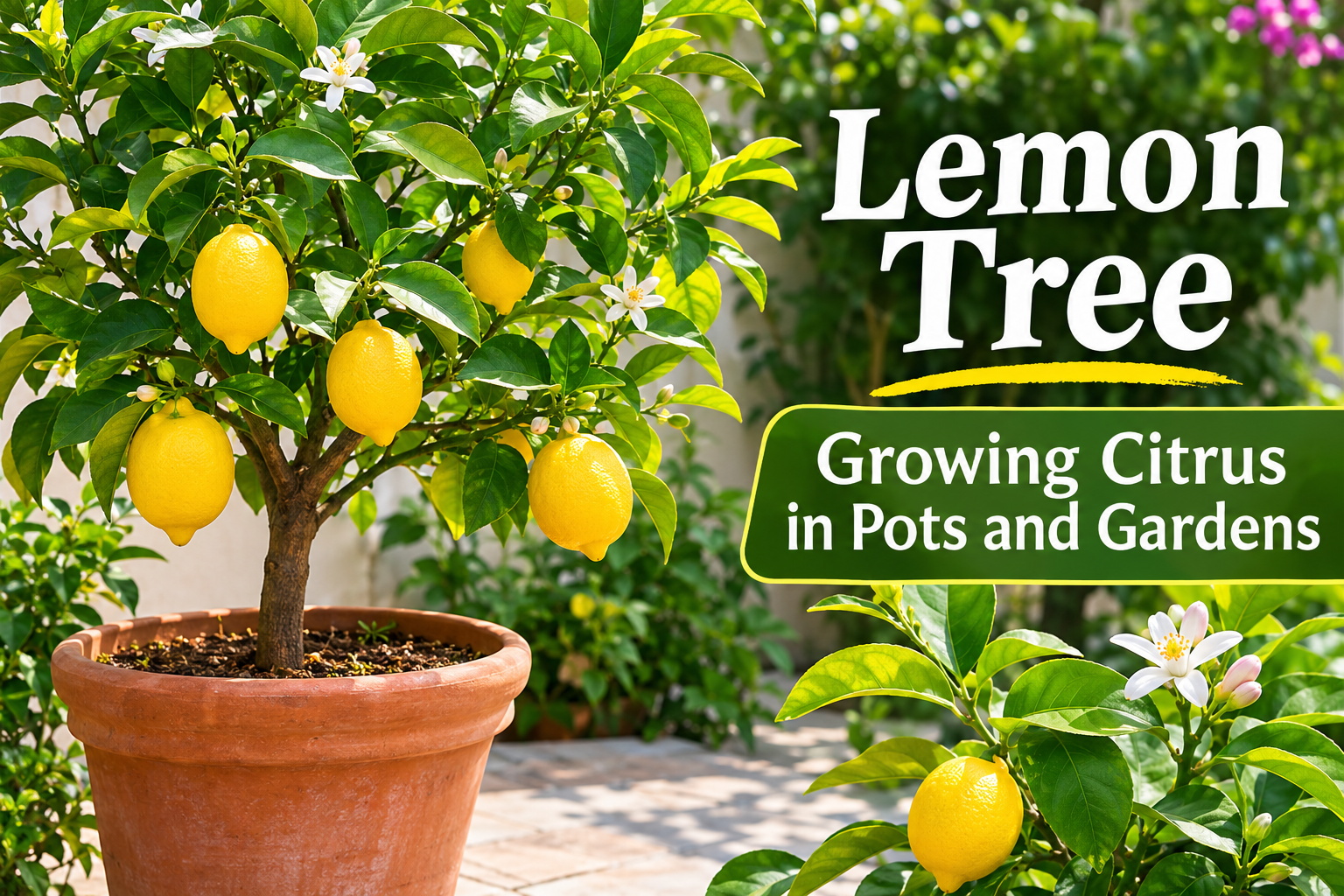
The lemon tree is one of the most rewarding fruit trees to grow at home. Its glossy evergreen leaves, fragrant blossoms, and bright yellow fruit make it attractive and useful in gardens, terraces, patios, and balconies.
Although lemon trees prefer warm, sunny conditions, they need the right balance of sunlight, moisture, drainage, and nutrients to grow successfully. Whether planted directly in the garden or kept in a container, proper care can help a lemon tree remain healthy and productive for many years.
1. Lemon Tree Growing Requirements
| Requirement | Recommendation |
|---|---|
| Sunlight | At least 6 hours of direct sun daily |
| Soil | Fertile, well-draining soil |
| Water | Water thoroughly as soil begins to dry |
| Fertilizer | Balanced fertilizer designed for citrus |
| Temperature | Warm conditions; protect from frost and extreme heat |
| Pruning | Light pruning to remove unwanted growth |
2. Choosing the Best Lemon Variety
Choosing the right variety is important, especially when growing citrus in a small space.
Meyer Lemon
Meyer lemon trees are popular for container gardening. Their fruit generally has a sweeter, less acidic flavor than traditional commercial lemons. A grafted tree on size-controlling rootstock can be an excellent option for patios.
Eureka Lemon
Eureka lemons are commonly grown for their juicy, acidic fruit. The trees are productive under favorable conditions and can grow in gardens or large containers.
Lisbon Lemon
Lisbon lemon trees are vigorous and often thorny, producing traditional tart lemons. They are particularly suited to garden planting where there is room for a larger tree.
3. How to Grow a Lemon Tree in a Pot

Growing a lemon tree in a pot provides greater control over its growing environment. Containers are particularly useful for balconies, patios, and locations where garden soil is unsuitable.
Step 1: Select a Suitable Container
Choose a pot approximately 35–40 cm in diameter for a young nursery tree, adjusting the size to its root ball. The container must have drainage holes to prevent waterlogging.
Step 2: Prepare the Soil
Use a high-quality citrus potting mix with good drainage and moisture retention. Avoid filling containers with heavy garden soil, which may compact and restrict root development.
Step 3: Plant at the Correct Depth
Position the tree so the top of its root ball is approximately level with the surrounding potting mix. Keep the graft union above the soil surface.
Step 4: Provide Sufficient Sunlight
Most lemon trees perform best with at least six hours of direct sunlight each day. In exceptionally hot weather, young or container-grown trees may need protection from intense afternoon exposure.
Step 5: Water Correctly
Check the upper 2–5 cm of soil. When this layer begins to dry, water thoroughly until excess water flows from the drainage holes. Never leave the pot standing in stagnant water.
Step 6: Repot When Necessary
As the tree grows, inspect the roots and potting mix. Repot into a slightly larger container when the roots become crowded or drainage declines.
4. Planting Lemon Trees in the Garden
Garden-grown lemon trees have more space to develop extensive roots and can eventually produce substantial fruit crops.
- Select a sunny, sheltered position with well-draining soil.
- Dig a hole approximately twice as wide as the root ball, but no deeper.
- Remove the tree carefully from its nursery container.
- Place the tree at its original planting depth.
- Backfill with suitable soil and water thoroughly.
- Apply mulch around the root area while leaving a gap around the trunk.
Allow adequate space for the mature canopy and keep the planting location away from structures that could interfere with future growth.
5. Watering and Fertilizing Lemon Trees
Watering
Consistent moisture supports healthy root growth, flowering, and fruit development. However, excessive watering can cause root problems and yellowing leaves.
Small container-grown trees usually need more frequent moisture checks than established garden trees. During hot weather, watering requirements may increase considerably. Always assess the soil rather than relying on a fixed schedule.
Fertilizing
Lemon trees need nitrogen and other essential nutrients to maintain healthy leaves and support fruit production. Apply a fertilizer formulated for citrus during active growth, following the product instructions.
Micronutrients such as iron, magnesium, manganese, and zinc may also be important, particularly in alkaline soils where certain nutrients become less available.
6. Lemon Flowers and Fruit Development

Lemon trees produce fragrant white flowers, sometimes with purple-tinged buds or petals. Successful flowering can lead to fruit development when growing conditions are favorable.
Most commonly cultivated lemon varieties are self-fertile, meaning a single tree can produce fruit without needing a second tree for cross-pollination.
Bees and other pollinating insects may improve fruit set outdoors. Some flowers and young developing fruit naturally fall from the tree, which is not necessarily a sign of poor health.
Young trees may take several years to establish reliable production, particularly when grown from seed. Grafted nursery trees generally begin bearing fruit sooner.
7. Pruning and Maintaining Your Lemon Tree
Lemon trees usually require relatively light pruning compared with many deciduous fruit trees.
- Remove dead, diseased, or damaged branches.
- Cut off shoots growing from below the graft union.
- Remove branches that rub against each other.
- Maintain a balanced canopy without excessive thinning.
- Avoid severe pruning during periods of intense heat.
Excessive pruning may expose the trunk and main branches to sunburn, especially in hot climates.
8. Harvesting Fresh Lemons

Harvest lemons when they reach the appropriate size, color, and maturity for their variety. Depending on growing conditions, the fruit may take several months to develop after flowering.
Use clean pruning shears to cut fruit from the branches without tearing or damaging surrounding growth.
Unlike some fruits, lemons do not become significantly sweeter after being picked, so harvesting at the proper stage is important.
9. Common Lemon Tree Problems
| Problem | Possible Cause | Recommended Action |
|---|---|---|
| Yellow leaves | Overwatering or nutrient deficiency | Check drainage and nutrient levels |
| Leaf drop | Environmental or watering stress | Stabilize growing conditions |
| Few flowers | Low sunlight or immature tree | Improve light and maintain balanced feeding |
| Brown leaf edges | Drought, salts, or fertilizer injury | Review watering and soil salinity |
| Sticky leaves | Scale insects or aphids | Inspect leaves and use citrus-safe pest controls |
10. Growing Lemon Trees in Hot Climates
In hot regions such as the United Arab Emirates, lemon trees can grow successfully when their roots and foliage are protected from extreme environmental stress.
- Provide abundant morning sunlight and afternoon protection when required.
- Use mulch to help reduce soil moisture loss.
- Check container soil frequently during summer.
- Keep pots away from excessively hot paving and reflective walls.
- Use well-drained soil and avoid standing water.
- Monitor salt accumulation when irrigation water is saline.
- Protect young trunks and exposed branches from sunburn.
In Abu Dhabi, the cooler months are often more comfortable for establishing new citrus plants. During peak summer temperatures, container placement and irrigation management become especially important.
11. Frequently Asked Questions
Can I grow a lemon tree on a balcony?
Yes. Choose a sufficiently large container with drainage holes, provide strong light, and protect the tree from severe heat and drying winds.
Can lemon trees grow indoors?
Yes, but they need very bright conditions and may require supplementary grow lighting. Insufficient light is a common reason indoor citrus trees struggle.
How long does a lemon tree take to produce fruit?
Grafted nursery trees can begin fruiting within a few years, depending on their age and conditions. Seed-grown plants can take substantially longer and may not produce fruit identical to the parent.
Do I need two lemon trees to grow fruit?
No. Most commonly cultivated lemon trees are self-fertile and can produce fruit without a second tree.
Can a lemon tree live permanently in a pot?
Yes. With suitable rootstock, regular feeding, appropriate watering, and occasional repotting or root maintenance, container-grown lemon trees can remain productive for many years.
Conclusion
Growing a lemon tree in a pot or garden is an enjoyable way to add greenery, fragrant flowers, and useful fruit to your home. Successful lemon cultivation depends on good drainage, sufficient sunlight, balanced nutrition, and careful watering.
With regular care and attention to local weather conditions, your lemon tree can become a long-lasting feature of your home garden.
Image Credits and Sources
- Lemon tree with developing fruit — Nana Pearls, CC0 1.0.
- Lemon tree in a container — Mansour Nasiri, CC BY-SA 3.0.
- Lemon flowers — Ben Cody, public domain.
- Lemon fruit and flowers — Davidbena, Wikimedia Commons. Review the file’s license before redistribution.
Gardening information is general guidance. Local soil, climate, water quality, and lemon variety can affect results.