

Views: 0
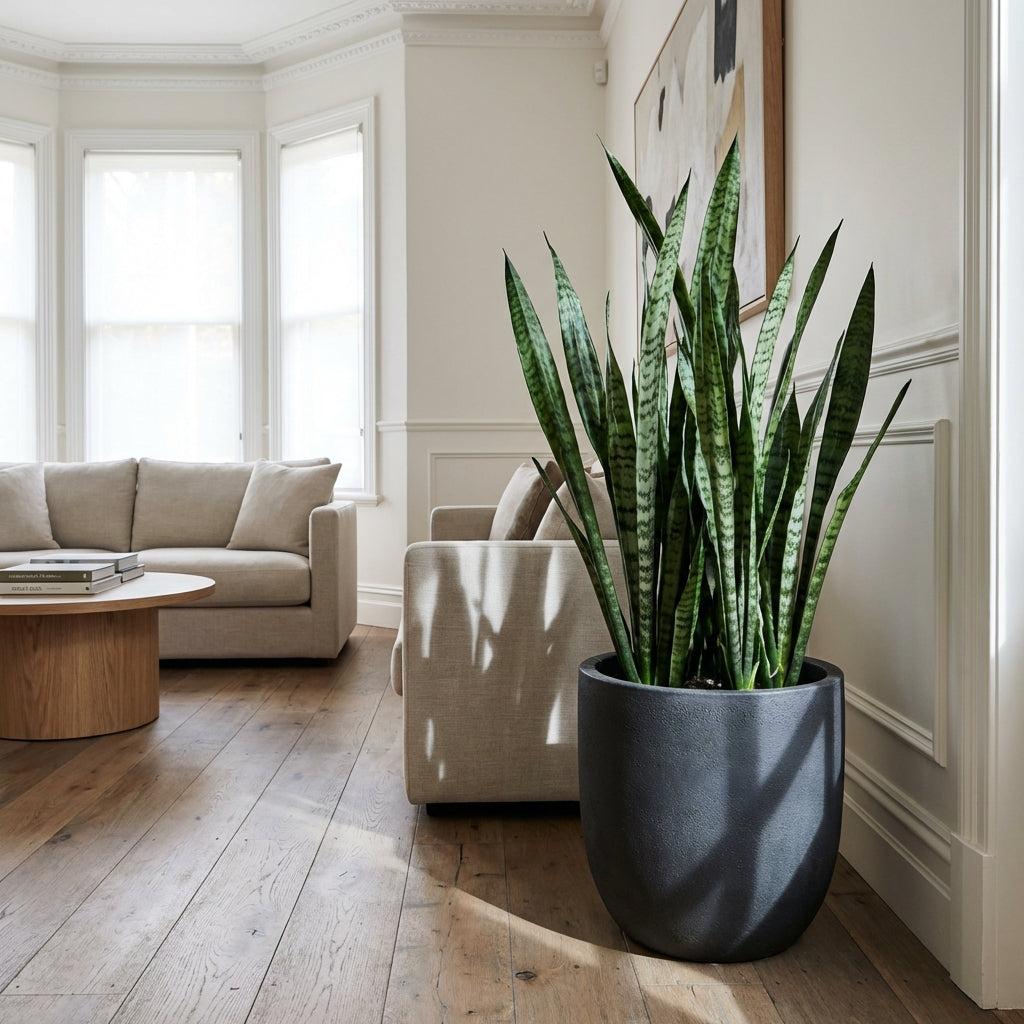
Snake Plant: How to Grow and Care for It


9
The Snake Plant, scientifically known as Dracaena trifasciata (formerly Sansevieria trifasciata), is one of the easiest indoor plants to grow. With its tall, sword-shaped leaves, striking patterns, and remarkable tolerance for neglect, it is an excellent choice for beginners and experienced plant enthusiasts alike.
Native to tropical Africa, this evergreen perennial stores water in its thick leaves, allowing it to survive periods of drought. It is especially suitable for homes, offices, apartments, and indoor spaces in hot-climate regions such as the UAE.
1. Snake Plant at a Glance
| Feature | Details |
|---|---|
| Scientific name | Dracaena trifasciata |
| Former name | Sansevieria trifasciata |
| Family | Asparagaceae |
| Plant type | Evergreen perennial |
| Light | Low to bright indirect light |
| Water | Allow soil to dry between waterings |
| Ideal temperature | Approximately 15–24°C |
| Soil | Fast-draining succulent mix |
| Humidity | Normal indoor humidity |
| Difficulty | Very easy |
| Pet safety | Toxic to cats and dogs |
The Royal Horticultural Society confirms that snake plants tolerate a wide range of indoor light conditions and require relatively little maintenance.
RHS
+1
2. How to Grow a Healthy Snake Plant

Step 1 — Choose the right light
Place your snake plant near a window with bright, indirect sunlight. It can tolerate low light, but growth will generally be slower. Protect it from intense afternoon sun, particularly during UAE summers.

Step 2 — Use well-draining soil
Choose a cactus or succulent potting mix. Adding perlite or pumice improves drainage. Always use a pot with drainage holes to reduce the risk of root rot.

Step 3 — Water carefully
Check the soil before watering. Once it has dried throughout, water thoroughly and allow excess water to drain. Avoid leaving water trapped in the pot or pouring it into the center of the leaves.

Step 4 — Repot when necessary
Repot when roots crowd the container or begin distorting it. Choose a slightly larger, stable pot rather than an oversized one, which may retain excessive moisture.
3. Watering Guide
Watering too frequently is one of the most common causes of snake plant problems.
| Conditions | Approximate watering interval |
|---|---|
| Bright indoor light, warm conditions | Every 2–3 weeks |
| Moderate indoor light | Every 3–4 weeks |
| Cool weather or low-light conditions | Every 4–8 weeks |
These intervals are only starting points. The soil should determine when you water, not a fixed calendar.
North Carolina Extension Gardener Plant Toolbox
+1
4. Popular Snake Plant Varieties

Laurentii
Tall, dark-green leaves with distinctive golden-yellow margins.

Hahnii
Compact bird’s-nest shape, ideal for desks and small shelves.

Moonshine
Elegant, broad, silvery-green leaves with a modern appearance.

Cylindrica
A related species, Dracaena angolensis, with unusual cylindrical leaves.
5. Common Problems and Solutions
| Problem | Possible cause | Recommended action |
|---|---|---|
| Yellow, soft leaves | Overwatering | Dry soil and inspect roots |
| Brown, crispy patches | Sun scorch | Move out of harsh direct sunlight |
| Wrinkled leaves | Prolonged drought | Check soil and water if dry |
| Slow growth | Insufficient light | Move to brighter indirect light |
| Mushy leaf bases | Root or crown rot | Remove damaged tissue, improve drainage |
| Brown tips | Water or environmental stress | Review watering and temperature |
6. How to Propagate Snake Plants


10
Snake plants can be multiplied in two main ways.
Division: Remove the plant from its pot, identify individual rooted shoots or offsets, and gently separate them. Replant each division into a suitable pot. This is the preferred method for preserving the original plant’s variegation.
Leaf cuttings: Cut a healthy leaf into sections, allow the cut surfaces to dry, and insert the lower ends into a free-draining growing medium. Maintain correct orientation and water sparingly. Rooting and new growth can take several weeks or months. Variegated leaf cuttings may produce all-green offspring.
7. Growing Snake Plants in the UAE
Snake plants are particularly useful indoor plants in Abu Dhabi and Dubai, provided they are protected from extreme heat and overwatering.
- Summer: Keep them indoors or in a well-shaded, ventilated outdoor location. Avoid direct midday and afternoon sunlight.
- Air-conditioned homes: They generally adapt well to normal indoor humidity. Avoid direct blasts of very cold air.
- Balconies: Use shaded locations, especially where reflected heat from walls and floors is intense.
- Winter: Reduce watering when growth slows and the soil stays moist longer.
A snake plant may tolerate the region’s hot climate, but its leaves and roots can still be damaged by extreme temperatures, particularly in containers exposed to direct sunlight.
8. Are Snake Plants Good for Indoor Air?
Snake plants are frequently promoted as air-purifying houseplants because they can absorb some pollutants under experimental conditions. However, a small number of plants in an ordinary room should not be considered an effective substitute for ventilation or mechanical air filtration.
Their most dependable benefits are attractive foliage, ease of care, and their contribution to a pleasant indoor environment.
Important: Snake plants contain saponins that are toxic to cats and dogs if ingested. Keep plants away from pets that chew foliage.
ASPCA
+1
9. Frequently Asked Questions
Can a snake plant survive without sunlight?
It can tolerate low-light rooms but needs some light to remain healthy over the long term. Total darkness is unsuitable.
How often should I fertilize my snake plant?
During active growth, a diluted houseplant fertilizer every 6–8 weeks is generally sufficient. Avoid excessive feeding.
Can I keep a snake plant in my bedroom?
Yes. It is a suitable bedroom plant when it receives sufficient light and is kept out of reach of pets.
Why is my snake plant falling over?
Possible causes include rotten roots, insufficient light, an unstable pot, or physical damage. Examine the base and root system first.
How long can snake plants live?
With appropriate care, they can remain healthy for many years, producing new shoots that can be divided and replanted.
SEO publishing package — Bin3aiah Plants
RECOMMENDED ARTICLE TITLE
Snake Plant: How to Grow and Care for It – Complete Guide
SLUG
snake-plant-growing-care-guide
FOCUS KEYWORD
snake plant care
META DESCRIPTION
Learn how to grow and care for snake plants with practical tips on watering, sunlight, soil, propagation, and common problems.
CATEGORIES
Indoor Plants · Plant Care Guides · Beginner-Friendly Plants
TAGS
Snake Plant, Sansevieria, Dracaena trifasciata, Indoor Plants, Houseplants, Watering, Propagation, UAE Gardening
Suggested featured image: A healthy yellow-edged snake plant in an elegant ceramic pot, photographed with soft natural light.
Recommended image alt text: “Healthy Dracaena trifasciata snake plant growing indoors in a decorative pot.”
Authoritative references: Royal Horticultural Society – Snake Plant Care · NC State Extension – Dracaena trifasciata · ASPCA – Pet Toxicity
Publishing status: Article prepared for plants.bin3aiah.net. Not yet published. The images shown are visual references; image reuse rights should be checked before uploading them to WordPress.